
Benefits of Cycling for Kids: Fitness and Development
Quick Answer
The benefits of cycling for kids include improved cardiovascular fitness, stronger muscles, better balance, coordination, and greater confidence. Regular bike riding also supports emotional well-being, social development, and healthy exercise habits. Cycling gives children an enjoyable way to stay physically active, explore their surroundings, and spend quality time outdoors.
- Supports heart health and physical endurance.
- Develops balance, coordination, and motor skills.
- Supports emotional well-being and self-confidence.
- Encourages outdoor play and social interaction.
- Helps establish lifelong physical activity habits.
Learning to ride a bicycle offers children much more than entertainment. Whether your child is learning on a balance bike or exploring local trails, cycling provides opportunities for physical, emotional, and social development.
Understanding these benefits can help you introduce cycling as an enjoyable and sustainable part of your child’s daily routine.
What Are the Main Benefits of Cycling for Kids?
Cycling benefits children by combining physical exercise, motor skill development, independent decision-making, and outdoor recreation in a single activity.
The Canadian Paediatric Society identifies physical fitness as one of the most researched benefits of childhood cycling.
The following table summarizes the main developmental benefits and how children experience them during everyday rides.
| Benefit | Development Area | How Cycling Helps |
|---|---|---|
| Physical fitness | Heart and lungs | Encourages sustained movement |
| Muscle development | Lower body | Engages muscles through pedaling |
| Balance | Motor skills | Requires body position adjustments |
| Confidence | Emotional development | Creates achievable challenges |
| Social skills | Communication | Encourages shared outdoor activities |
Cycling offers the greatest practical value when children enjoy riding regularly rather than treating every ride as a fitness session.
Physical Health Benefits of Cycling for Children

Regular cycling supports children’s physical health by providing aerobic exercise and engaging muscles throughout the body.
Improves Cardiovascular Fitness
Cycling challenges the heart and lungs when children pedal at an active pace. Their bodies need more oxygen to support working muscles during sustained movement.
Regular rides can help children develop endurance for other everyday activities. Riding to a nearby park, for example, creates an opportunity to exercise without following a formal workout routine.
Strengthens Leg Muscles
Bike riding engages the quadriceps, hamstrings, calf muscles, and glutes during repeated pedaling movements.
Children also use muscles around their torso to maintain a stable riding position. Their arms and shoulders help control the handlebars while steering.
These movements provide practical muscular activity, particularly when children ride on gently changing terrain.
Supports Healthy Weight Management
Cycling contributes to healthy weight management by helping children stay physically active and use energy through movement.
However, bicycle riding should focus on enjoyment, fitness, and healthy development rather than weight loss targets. Children also need adequate nutrition and rest to support growth.
Provides Low-Impact Exercise
Cycling generally places less repetitive impact on the body than activities involving repeated jumping or running.
The bicycle supports part of the child’s body weight during seated riding. However, an uncomfortable riding position or poorly fitted bicycle can cause discomfort.
Cycling should complement other activities rather than replace every form of exercise.
How Cycling Improves Balance and Coordination
Bike riding helps children practice balance and coordination because they must control several movements while keeping the bicycle upright.
A child needs to steer, pedal, brake, and adjust body position. Learning to combine these actions creates opportunities to develop motor skills.
Develops Gross Motor Skills
Cycling exercises gross motor skills, which involve coordinated movements using larger muscle groups.
Young children practice pushing against the ground, lifting their feet, turning handlebars, and controlling forward movement on a balance bike.
Pedal bikes introduce additional tasks, including maintaining a pedaling rhythm and stopping through controlled braking.
Improves Spatial Awareness
Cycling helps children practice spatial awareness by judging their position relative to paths, obstacles, and other riders.
Children learn that changing their steering affects where the bicycle travels. They also practice adjusting speed before reaching corners and obstacles.
These skills develop gradually through supervised practice in suitable riding environments.
Mental and Emotional Benefits of Cycling for Kids
Cycling can support children’s emotional well-being by providing enjoyable physical activity, opportunities for achievement, and time away from demanding routines.
Supports a Positive Mood
Enjoyable bike rides provide children with opportunities to relax and engage in recreational movement.
A ride after school can offer a change of environment and a break from academic tasks. Children may particularly enjoy rides where they can explore familiar outdoor spaces.
Cycling is a supportive activity for emotional health, not a replacement for professional mental health care.
Builds Self-Confidence
Learning to ride a bicycle gives children opportunities to build confidence through achievable goals.
Successfully balancing, completing a turn, or reaching a nearby destination can create a sense of accomplishment. Each achievement helps children recognize their progress.
Encouraging effort rather than comparing performance allows children to develop skills at their own pace.
Encourages Perseverance
Learning bicycle skills encourages children to practice challenging tasks repeatedly until they become more comfortable.
A beginner may struggle with steering or starting independently. Breaking these skills into smaller tasks makes learning more manageable.
Parents can support perseverance by celebrating gradual improvement instead of expecting immediate success.
Social Benefits of Bike Riding for Children

Cycling creates opportunities for children to communicate, cooperate, and enjoy shared activities with family members and friends.
Group rides encourage children to pay attention to others, adjust their pace, and follow agreed riding rules.
Common social learning opportunities include:
- Taking turns on shared riding paths.
- Communicating before stopping or changing direction.
- Waiting for slower riders.
- Respecting pedestrians and other cyclists.
- Encouraging friends who are learning new skills.
- Participating in family recreational activities.
These experiences give children practical ways to develop cooperation without turning outdoor play into a competitive activity.
How Cycling Encourages Independence and Responsibility
Age-appropriate cycling helps children develop independence by allowing them to practice controlling their movements and making simple decisions.
A child can choose a direction within a supervised riding area, decide when to stop, and learn how to care for personal equipment.
Giving children suitable responsibilities can also help them develop a sense of ownership over their bicycle.
- Putting their helmet away after riding.
- Reporting unusual bicycle noises to an adult.
- Helping clean the bicycle.
- Remembering agreed riding boundaries.
- Parking the bicycle in its designated place.
Independence should increase with riding skills, maturity, and awareness of surroundings. Learning to pedal does not automatically mean a child is ready to ride alone.
Does Cycling Help Reduce Children’s Screen Time?
Cycling provides an active alternative to recreational screen time when children choose outdoor riding instead of sitting with electronic devices.
A bicycle creates opportunities for movement, exploration, and family interaction. Having an enjoyable outdoor activity available may make it easier to establish a balanced routine.
Parents can encourage cycling by arranging family rides or allowing supervised outdoor play after school. The goal is to create appealing alternatives rather than use exercise as punishment.
Tip
Let your child choose a destination, such as a neighborhood playground, to make the next family bike ride more engaging.
How Much Cycling Is Good for Children?
Suitable cycling amounts depend on a child’s age, riding ability, energy levels, and overall physical activity.
The CDC physical activity guidelines recommend at least 60 minutes of daily moderate to vigorous physical activity for children ages 6 to 17.
Cycling can contribute toward this activity goal when children ride at sufficient intensity. The recommendation covers total physical activity, not cycling alone.
Preschool children should have opportunities to move and play throughout the day. Their bicycle activities should match their developmental readiness.
Beginners can start with short rides and gradually extend them as their skills and comfort improve. Avoid requiring children to complete a fixed distance when they are tired or uncomfortable.
Is Cycling Enough Exercise for Growing Children?
Cycling is a useful form of aerobic exercise, but children benefit from participating in other types of physical activity as well.
Different activities challenge the body in different ways. Cycling emphasizes repeated pedaling, while running, jumping, and climbing provide other movement experiences.
The following comparison shows how these activities can complement one another.
| Activity | Main Focus | Movement |
|---|---|---|
| Cycling | Endurance and balance | Pedaling and steering |
| Running | Aerobic and bone-loading activity | Weight-bearing strides |
| Jumping | Bone-loading activity | Takeoff and landing |
| Climbing | Muscular development | Gripping and pulling |
Combining bicycle rides with active playground games provides a wider variety of physical challenges than cycling alone.
How to Help Your Child Enjoy Cycling Safely
Children can enjoy the benefits of cycling when their bicycle, riding environment, and supervision match their abilities.
The American Academy of Pediatrics provides bicycle safety guidance that emphasizes appropriate helmets, supervision, and readiness before riding in traffic.
Choose a bicycle your child can comfortably control. Check the brakes and tires before riding, and make sure your child can stop independently.
Do
- Use a properly fitted bicycle helmet.
- Practice in traffic-free riding areas.
- Allow breaks whenever your child needs them.
Avoid
- Using an oversized bicycle.
- Introducing traffic before your child is ready.
- Forcing children to ride through pain or exhaustion.
Keep early cycling experiences enjoyable and manageable. A child who feels comfortable during practice has more opportunities to develop riding skills gradually.
Children who experience persistent pain, dizziness, or unusual breathing difficulties during exercise should stop riding and receive appropriate medical advice.
How to Make Cycling a Regular Habit for Kids
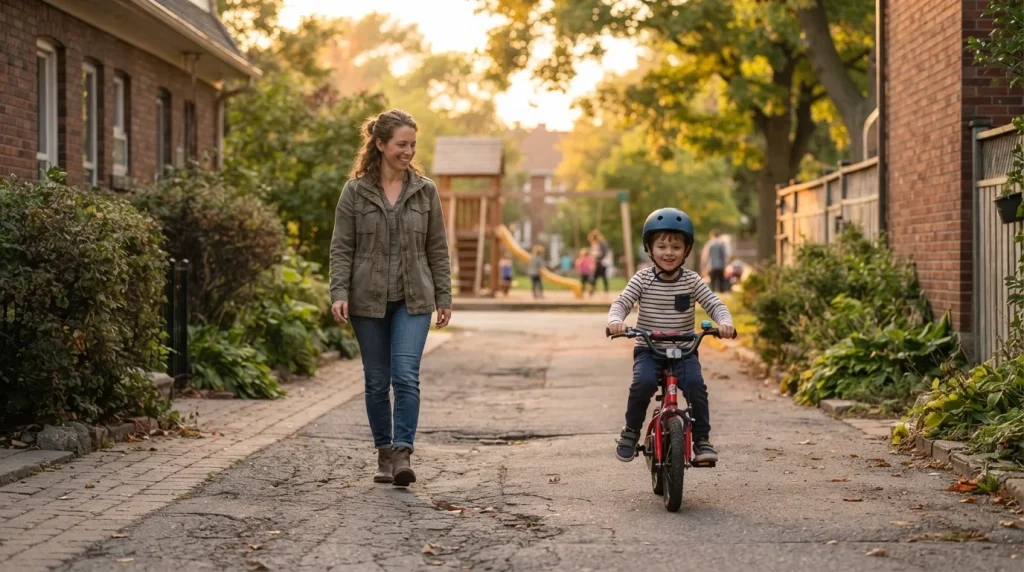
Making cycling part of enjoyable family routines can help children develop lasting interest in physical activity.
Begin with destinations your child enjoys visiting. Choose routes with suitable surfaces, manageable distances, and minimal traffic exposure.
- Choose a regular opportunity for supervised bicycle rides.
- Allow your child to help select safe destinations.
- Match the riding pace to your child’s ability.
- Introduce new routes gradually as skills improve.
- Celebrate participation and progress rather than speed.
Some children prefer relaxed recreational rides, while others enjoy practicing bicycle skills. Supporting their individual interests can help keep cycling enjoyable.
Kids Bicycle Helmets
A properly fitted bicycle helmet helps protect your child’s head during everyday bike rides.
Frequently Asked Questions
Does cycling make children grow taller?
Cycling supports physical fitness and healthy development, but riding a bicycle does not directly increase a child’s genetically determined height.
Height depends on factors including genetics, nutrition, hormones, and general health. Children should participate in cycling for enjoyment and physical activity rather than expecting it to increase their height.
Can cycling help children sleep better?
Regular cycling may support better sleep in children as part of a balanced routine that includes sufficient physical activity and consistent bedtime habits.
Outdoor rides can also provide a change of environment after school. However, cycling does not guarantee improved sleep or resolve underlying sleep problems.
Can children with disabilities benefit from cycling?
Children with disabilities may benefit from cycling when the equipment, riding environment, and level of assistance match their individual abilities.
Adaptive bicycles and tricycles may offer suitable alternatives to conventional bicycles. A pediatric physical therapist can help families identify appropriate equipment and activity options when specialized support is needed.
Is cycling to school beneficial for children?
Cycling to school can help children incorporate regular exercise into their routine when they have the necessary riding skills and a suitable route.
Parents should assess traffic conditions, road crossings, and their child’s ability to recognize hazards. Practice the journey together before considering more independent travel.
Do balance bikes provide health benefits for toddlers?
Balance bikes encourage toddlers to participate in active play while practicing steering, body control, and balance without managing conventional bicycle pedals.
These bicycles allow children to propel themselves using their feet. Activities should take place under adult supervision in a safe area that matches the child’s abilities.
Does cycling improve children’s academic performance?
Cycling contributes to physical activity, which may support attention and learning, but bicycle riding alone does not guarantee improved academic performance.
School achievement depends on many factors, including sleep, nutrition, educational support, and individual learning needs. Cycling can complement these factors as part of a balanced lifestyle.
Conclusion
The benefits of cycling for kids extend beyond physical fitness to balance, coordination, confidence, and social development. Introduce cycling through enjoyable, supervised rides on a properly fitted bicycle, and let your child gradually develop the skills needed for lifelong active living.
