
Is Cycling Good for Kids’ Growth? Benefits and Height
Quick Answer
Is cycling good for kids’ growth? Yes, regular cycling supports healthy physical development by improving muscle strength, cardiovascular fitness, balance, and coordination. However, cycling does not directly increase height beyond a child’s natural growth potential. Children benefit most when cycling is combined with balanced nutrition, sufficient sleep, and other physical activities.
- Cycling helps develop stronger leg muscles and physical endurance.
- Regular bike riding supports overall fitness and movement skills.
- Cycling does not directly lengthen bones or increase final height.
- Running, jumping, and climbing complement cycling for healthy bone development.
- A properly fitted bicycle and helmet help children ride safely.
Many parents wonder whether riding a bicycle can help their children grow taller, stronger, and healthier. Cycling is an enjoyable form of exercise that can support several aspects of childhood development.
Understanding how cycling affects growth helps you encourage healthy riding habits without expecting unrealistic changes in your child’s height.
How Is Cycling Good for Kids’ Growth?
Cycling supports children’s physical development by encouraging regular movement and strengthening the muscles involved in riding a bicycle.
Pedaling requires repeated leg movements, while steering and balancing involve coordination between different parts of the body. These movements give children opportunities to develop physical skills through active play.
The benefits of cycling extend beyond height and body size. Regular riding can become part of a healthy lifestyle that encourages children to remain physically active as they grow.
Important areas of development supported by cycling include:
- Muscular strength and endurance.
- Cardiovascular fitness.
- Balance and body coordination.
- Physical confidence.
- Healthy exercise habits.
- General physical fitness.
Children should participate in different forms of exercise rather than relying on cycling alone to meet all their developmental needs.
Does Cycling Increase Height in Children?
Cycling does not directly increase a child’s final height or make the bones grow longer than they would through normal development.
A child’s height depends largely on genetics, along with nutrition, hormones, general health, and other developmental factors. Regular exercise supports overall health but cannot guarantee additional inches of growth.
According to the American Academy of Pediatrics, a child’s adult height is influenced by inherited traits and several environmental and health factors.
Can Pedaling Make a Child’s Legs Longer?
Pedaling strengthens the muscles used to move the legs, but there is no established evidence that ordinary cycling directly lengthens leg bones.
Children naturally experience changes in leg length and body proportions as they mature. These changes may happen during periods when they are also learning to ride a bicycle.
Growing taller while cycling regularly does not mean that cycling caused the increase in height.
Does Cycling Affect Growth Plates?
Normal bicycle riding is not a proven method of stimulating growth plates to produce additional height.
Growth plates are areas of developing tissue near the ends of growing bones. They allow bones to lengthen during childhood and adolescence.
Once growth plates close after physical maturation, cycling cannot reopen them or restart natural bone lengthening.
Physical Benefits of Cycling for Growing Kids
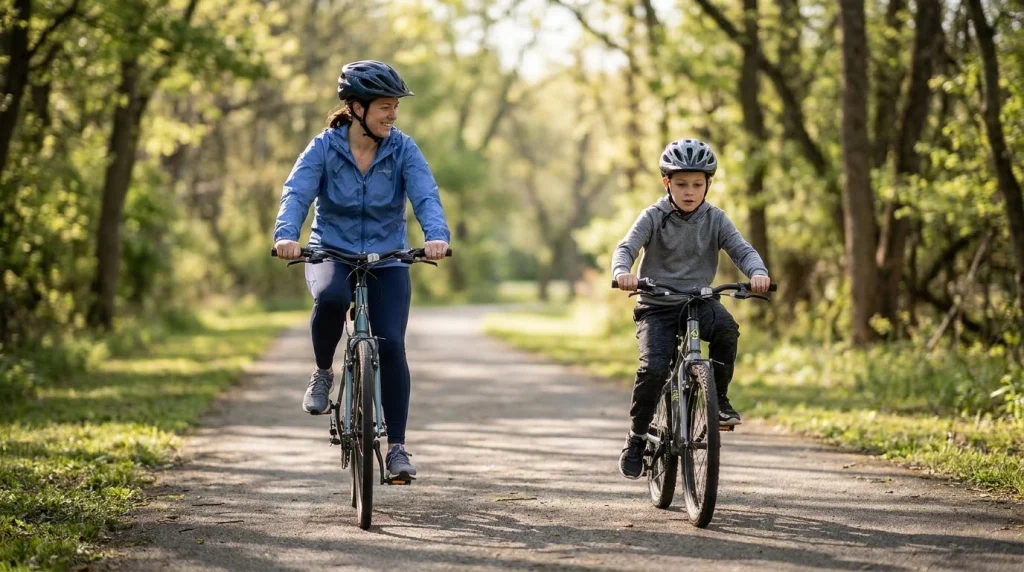
Regular cycling supports several areas of physical fitness that help children participate in everyday activities and active play.
Improves Leg Muscle Strength
Pedaling engages the muscles around the thighs, hips, and lower legs, helping children develop muscular fitness through repeated movement.
Children can build endurance by riding at a comfortable pace suited to their abilities. They do not need difficult hills or intense cycling sessions to enjoy active play.
Supports Heart and Lung Fitness
Cycling provides aerobic exercise, which means physical activity that increases breathing and heart rate.
Regular aerobic activity helps children develop the fitness needed for outdoor games, sports, and other activities that involve sustained movement.
Family bicycle rides offer an enjoyable way to make aerobic exercise part of everyday life.
Develops Balance and Coordination
Learning to ride a bicycle gives children opportunities to practice balance, steering, pedaling, and controlling their body movements.
A child must coordinate several actions while riding, including looking ahead and adjusting direction. Practice allows children to become more familiar with these movement patterns.
Beginners should develop control at a comfortable pace before attempting more challenging riding conditions.
Encourages an Active Lifestyle
Cycling provides children with an enjoyable reason to move rather than spending all their leisure time sitting indoors.
Children who enjoy bicycle riding may be more willing to participate in outdoor activities. Parents can encourage this interest through relaxed family rides and supervised outdoor play.
Is Cycling Good for Children’s Bone Development?
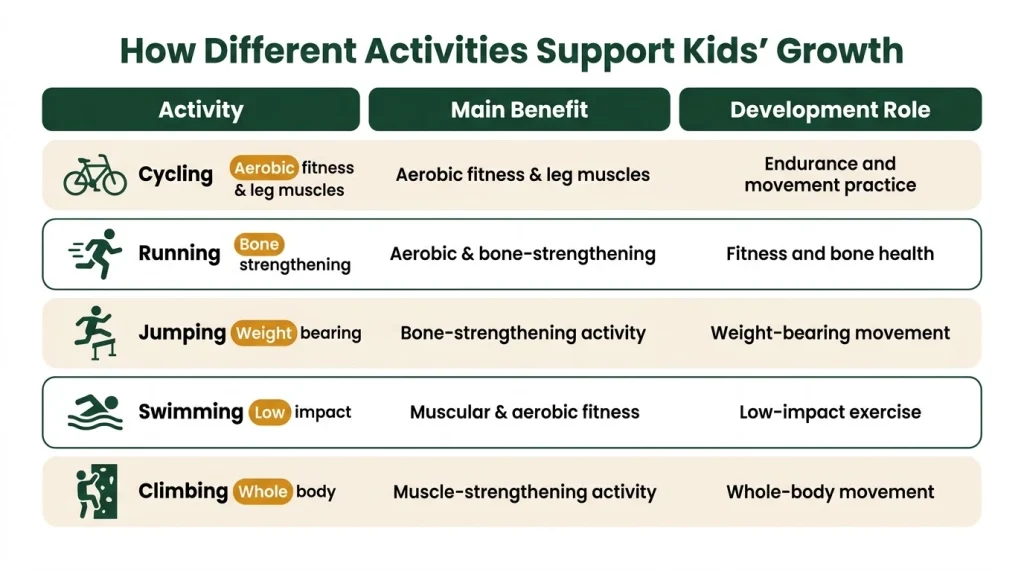
Cycling supports muscular and cardiovascular fitness, but it is less effective for strengthening bones than activities that place more weight on the skeleton.
During bicycle riding, the saddle supports part of the child’s body weight. Running and jumping place different mechanical forces on developing bones.
According to SickKids through its physical activity guidelines for children, cycling and swimming benefit muscle and heart health but provide less bone-strengthening stimulation than weight-bearing activities.
The following table compares how different activities can contribute to a child’s physical development.
| Activity | Main Benefit | Development Role |
|---|---|---|
| Cycling | Aerobic fitness and leg muscles | Endurance and movement practice |
| Running | Aerobic and bone-strengthening activity | Fitness and bone health |
| Jumping | Bone-strengthening activity | Weight-bearing movement |
| Swimming | Muscular and aerobic fitness | Low-impact exercise |
| Climbing | Muscle-strengthening activity | Whole-body movement |
Combining bicycle riding with weight-bearing play provides a broader range of physical activity than cycling alone.
How Much Cycling Should Kids Do for Healthy Growth?
Children can include cycling in their daily physical activity, but the appropriate riding duration depends on their age, abilities, and overall activity level.
The Centers for Disease Control and Prevention recommends that children ages 6 to 17 get at least 60 minutes of moderate-to-vigorous physical activity daily.
The CDC’s child activity guidelines also recommend muscle-strengthening and bone-strengthening activities on at least 3 days each week.
60 Minutes
Daily physical activity for ages 6 to 17
Source: CDC
3 Days
Bone-strengthening activity each week
Source: CDC
3 Days
Muscle-strengthening activity each week
Source: CDC
These recommendations apply to total physical activity, not exclusively to cycling. Children can meet their activity needs through a mixture of bike riding, running, sports, and playground activities.
Preschool children should have regular opportunities for active play throughout the day rather than follow a demanding cycling schedule.
Can Too Much Cycling Affect a Child’s Growth?
Excessive cycling may become unhealthy when demanding exercise interferes with adequate nutrition, recovery, sleep, or normal childhood activities.
Growing children need sufficient food to support both physical development and everyday energy demands. Exercise should not replace meals or become a source of pressure.
Parents should pay attention to signs that a cycling routine may be too demanding:
- Persistent tiredness after riding.
- Recurring knee or leg pain.
- Difficulty recovering between activities.
- Unintended weight loss.
- Reduced enjoyment of cycling.
- Exercise interfering with normal meals or sleep.
Persistent symptoms or concerns about slowed growth should be discussed with a pediatrician rather than addressed by increasing exercise.
What Else Do Children Need for Healthy Growth?
Cycling works alongside balanced nutrition, adequate sleep, general healthcare, and varied physical activities to support healthy childhood development.
Balanced Nutrition
Children need enough energy, protein, vitamins, and minerals to support their developing bodies.
Regular meals containing varied foods help meet nutritional needs while supporting the energy required for bicycle riding and other physical activities.
A child should not follow a restrictive diet simply to improve cycling performance or change their body size.
Adequate Sleep
Sufficient sleep supports normal childhood development and allows children to recover from their daily activities.
Plan bicycle rides around your child’s normal daily routine rather than allowing exercise to interfere with bedtime.
Different Forms of Physical Activity
A varied exercise routine helps children develop physical abilities that cycling alone may not address.
Encourage activities such as jumping, climbing, running, and outdoor games alongside bicycle riding. Let children explore different activities according to their interests and physical abilities.
How to Encourage Safe Cycling During Childhood
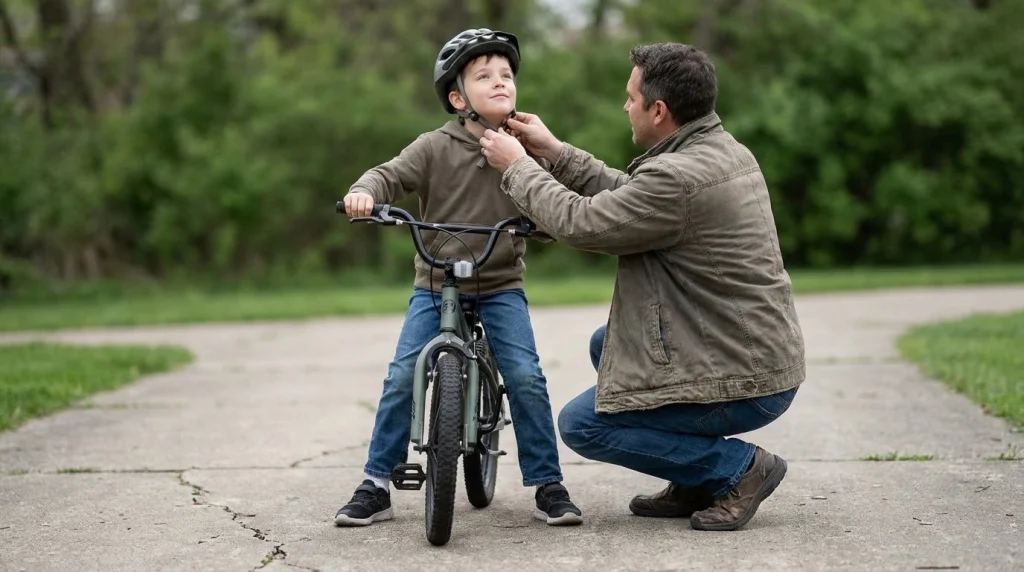
Safe cycling habits help children enjoy regular exercise while reducing avoidable risks associated with bicycle riding.
Start with a bicycle that fits your child’s body and riding ability. Avoid choosing an oversized bicycle simply because your child will eventually grow into it.
As children grow, check whether they can still reach the handlebars, operate the brakes, and control the bicycle comfortably.
Warning
Never raise a child’s bicycle saddle beyond a safe riding position to try to stretch their legs. Poor bicycle fit can reduce control and increase the risk of falls.
Do
- Choose safe riding areas away from traffic.
- Use a properly fitted bicycle helmet.
- Increase riding difficulty gradually.
- Allow water and rest breaks.
- Check bicycle fit as your child grows.
Avoid
- Forcing children to ride long distances.
- Using an oversized bicycle.
- Ignoring persistent discomfort.
- Skipping protective equipment.
- Setting unrealistic height-related goals.
Young children need adult supervision and riding environments appropriate for their skill level. Make bicycle rides enjoyable rather than treating them as compulsory workouts.
When Should Parents Be Concerned About Growth?
Parents should consult a pediatrician when a child’s growth slows unexpectedly or their height measurements show an unusual pattern over time.
Children naturally grow at different rates. Comparing your child’s height with another child’s height does not provide a reliable assessment of their development.
A pediatrician can review growth charts and determine whether additional evaluation is necessary. Increasing cycling frequency is not a substitute for investigating possible growth problems.
Frequently Asked Questions
Can cycling help kids grow taller during puberty?
Cycling during puberty supports physical fitness, but it has not been established as a method for increasing a child’s final adult height. Puberty involves natural hormonal changes that influence how the body develops. Children should cycle for enjoyment and health rather than expecting extra height.
Is stationary cycling good for growing children?
Stationary cycling can provide aerobic exercise for growing children when the equipment fits their body and suits their physical abilities. Unlike outdoor cycling, stationary riding does not require the same steering and balancing skills. Children should also participate in activities that involve varied body movements.
Does cycling stunt growth in young children?
Ordinary, age-appropriate cycling is not known to stunt growth in healthy children who receive sufficient nutrition and adequate rest. Problems may arise when demanding exercise is combined with inadequate food intake or untreated injuries. Discuss persistent pain or unexpected growth changes with your child’s pediatrician.
Can riding a bicycle replace other childhood sports?
Bicycle riding can contribute to children’s daily exercise needs, but it should not replace every other form of physical activity. Running, jumping, climbing, and playground games provide additional movement and bone-strengthening opportunities. A varied activity routine gives children more ways to develop physical skills.
Should children cycle before or after school?
Children can cycle before or after school if their riding schedule allows enough time for meals, rest, and other daily responsibilities. Choose a time when safe riding conditions and appropriate adult supervision are available. Enjoyable activity matters more than following a particular exercise schedule.
Can children cycle without doing intense workouts?
Children can benefit from recreational bicycle riding without following intense workouts, performance targets, or competitive training schedules. Comfortable rides allow beginners to practice basic bicycle control and gradually develop physical fitness. Riding intensity should match the child’s abilities and overall health rather than their desired height.
Conclusion
Is cycling good for kids’ growth? Cycling supports healthy physical development, but it cannot guarantee increased height or replace other essential growth factors. Encourage enjoyable bicycle rides alongside balanced meals, sufficient sleep, and varied physical activities.
