
Is Cycling a Good Exercise for Kids? Benefits and Safety
Quick Answer
Yes, cycling is a good exercise for kids because it supports cardiovascular fitness, strengthens muscles, improves balance, and encourages active play. Regular bike riding can also support emotional well-being and healthy exercise habits. Children benefit most when cycling is safe, enjoyable, age-appropriate, and combined with other physical activities.
- Improves heart and lung fitness.
- Strengthens leg muscles and develops coordination.
- Provides low-impact aerobic exercise.
- Encourages outdoor play and healthy habits.
- Helps children meet daily physical activity goals.
Finding an exercise your child enjoys can make staying active much easier. Cycling offers children a chance to move, explore their surroundings, and develop physical skills while having fun.
Understanding the benefits, exercise requirements, and safety precautions can help you make bike riding a healthy part of your child’s routine.
Why Is Cycling a Good Exercise for Kids?
Cycling is a good exercise for kids because it combines aerobic movement, muscle activity, balance, and coordination in an enjoyable recreational activity.
Pedaling requires repeated movement from the lower body. As children ride at a moderate pace, their heart rate and breathing increase to support working muscles.
The Canadian Paediatric Society identifies physical fitness as one of the strongest documented benefits of childhood cycling.
Unlike structured workouts, bike riding can become part of everyday activities. Children can ride with their families, visit nearby parks, or practice cycling skills in safe recreational areas.
Physical Health Benefits of Cycling for Children
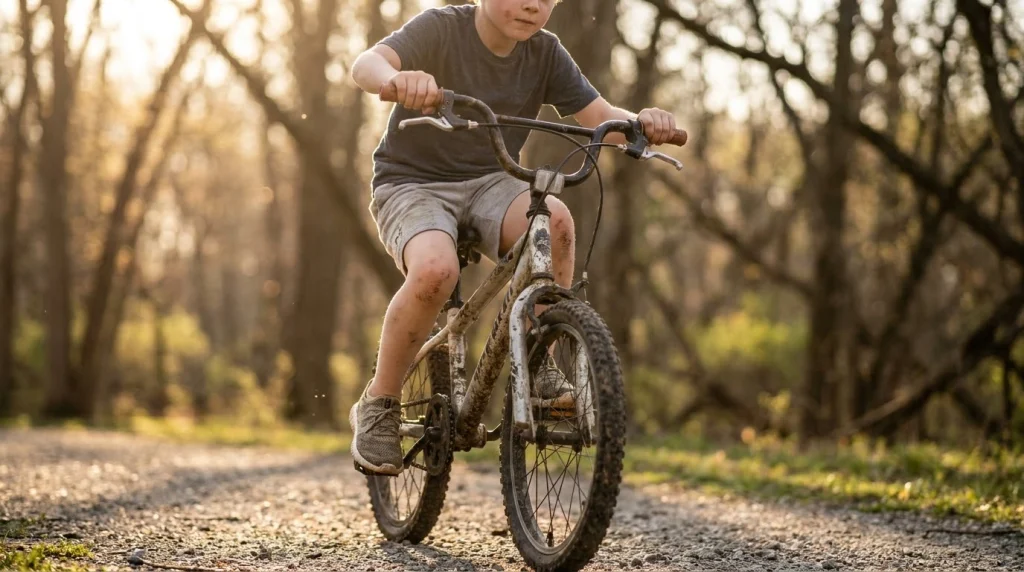
Regular cycling supports children’s physical development by exercising their cardiovascular system, lower-body muscles, and movement skills.
Improves Cardiovascular Fitness
Cycling helps improve cardiovascular fitness by making the heart and lungs work harder during active pedaling.
Children who ride at a suitable intensity practice sustaining physical effort. Regular aerobic activity supports their ability to participate in active games and recreational sports.
Strengthens Leg Muscles
Bike riding engages the muscles around the thighs, hips, and calves as children push the pedals and control their movements.
Riding on different surfaces can change the amount of effort required. Beginners should develop comfortable pedaling skills before attempting more demanding routes.
Develops Balance and Coordination
Cycling helps children practice balance and coordination because riding requires several body movements to work together.
Children learn to steer, pedal, brake, and adjust their body position. These movements provide opportunities to develop greater control over their bikes.
Provides Low-Impact Exercise
Cycling provides low-impact exercise because children’s feet remain supported by the pedals rather than repeatedly striking the ground.
The seated position can make cycling a comfortable alternative to activities involving frequent jumping. However, children still need other forms of movement that support bone development.
Mental and Emotional Benefits of Cycling
Cycling can support children’s emotional well-being by providing enjoyable movement, opportunities for achievement, and shared recreational experiences.
Learning to ride a bicycle gives children a practical skill they can develop through practice. Successfully completing a familiar route may also encourage confidence.
Bike riding offers opportunities for:
- Enjoyable outdoor recreation.
- Social interaction with family and friends.
- Building confidence through skill development.
- Taking breaks from sedentary activities.
- Developing positive associations with exercise.
Keep cycling enjoyable rather than focusing on speed or competition. Children should feel comfortable developing their riding skills at their own pace.
How Much Cycling Should Kids Do Each Day?
Children should cycle for a manageable amount of time that matches their age, riding ability, fitness level, and overall physical activity needs.
According to the CDC physical activity guidelines, children aged 6 to 17 need at least 60 minutes of moderate to vigorous physical activity daily.
Children aged 3 to 5 should have opportunities to move actively throughout the day. These recommendations cover overall physical activity, not cycling alone.
The following table explains how cycling can fit into different stages of childhood.
| Age Group | Physical Activity Goal | Cycling Approach |
|---|---|---|
| Ages 3 to 5 | Active play throughout the day | Supervised riding and basic movement practice |
| Ages 6 to 12 | At least 60 minutes of daily physical activity | Recreational cycling and supervised family rides |
| Ages 13 to 17 | At least 60 minutes of daily physical activity | Recreational cycling and ability-appropriate longer rides |
Cycling does not need to account for every active minute. Playground activities, walking, running, and sports can contribute to the same daily goal.
Is Cycling Enough Exercise for Kids?
Cycling provides valuable aerobic exercise, but children also need activities that strengthen their bones and other muscle groups.
The CDC recommends including vigorous aerobic movement, muscle-strengthening activities, and bone-strengthening activities on at least 3 days each week for school-aged children.
Because cycling supports body weight through the bicycle seat, it does not provide the same bone-loading benefits as jumping or running.
A balanced physical activity routine can include:
- Cycling for aerobic fitness and coordination.
- Running for cardiovascular fitness and bone loading.
- Jumping rope for bone-strengthening movement.
- Playground climbing for muscle development.
- Active games for movement variety.
Combining these activities allows children to develop different physical abilities instead of relying on a single exercise.
Cycling vs. Running and Walking for Kids
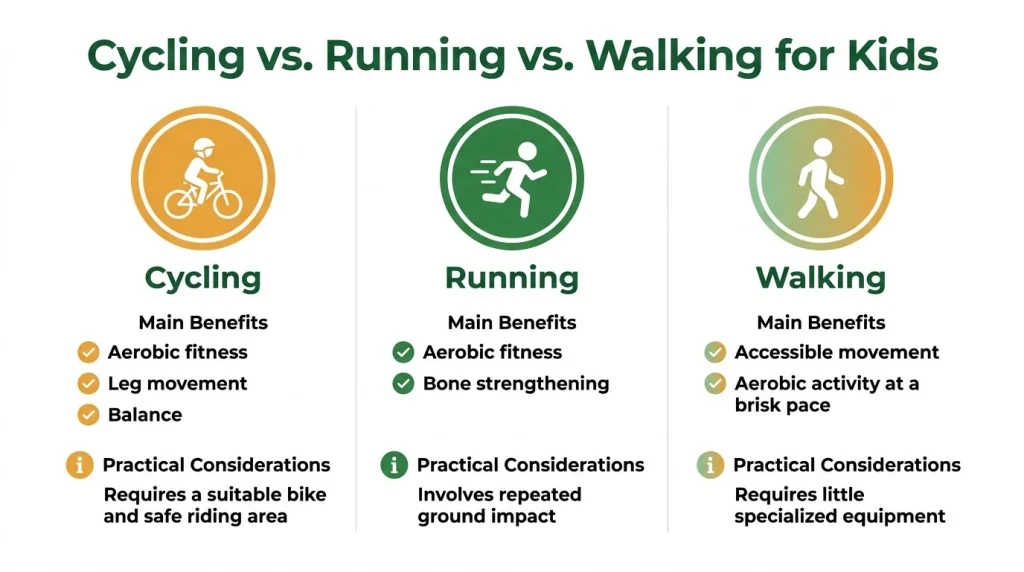
Cycling, running, and walking provide different exercise benefits, making each activity useful within a child’s regular physical activity routine.
The following comparison highlights how these activities differ in movement, impact, and equipment requirements.
| Activity | Main Benefits | Practical Considerations |
|---|---|---|
| Cycling | Aerobic fitness, leg movement, balance | Requires a suitable bike and safe riding area |
| Running | Aerobic fitness and bone strengthening | Involves repeated ground impact |
| Walking | Accessible movement and aerobic activity at a brisk pace | Requires little specialized equipment |
Children do not need to choose one activity over another. A combination of enjoyable movements supports a more varied exercise routine.
How to Make Cycling Safe for Kids
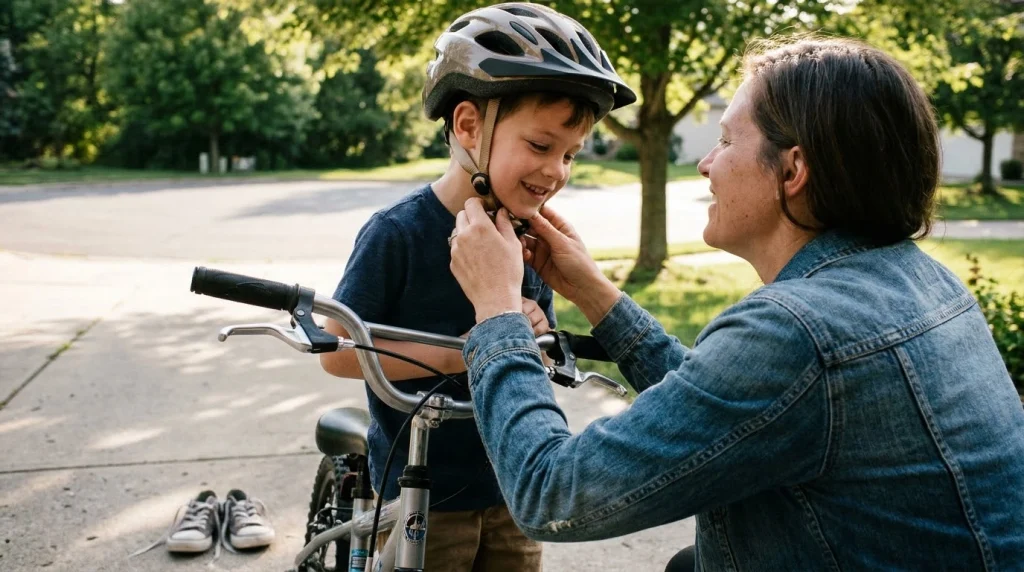
Safe cycling requires suitable equipment, appropriate supervision, basic riding skills, and a riding environment that matches your child’s abilities.
The National Highway Traffic Safety Administration recommends properly fitted helmets, working brakes, correctly sized bicycles, and routes with fewer traffic hazards.
Follow these safety practices before allowing your child to ride:
- Choose a bicycle that your child can control comfortably.
- Fit a bicycle helmet correctly before every ride.
- Check the brakes, tires, and steering.
- Secure loose clothing and shoelaces.
- Choose a riding area away from moving traffic.
- Provide supervision appropriate to your child’s abilities.
- Teach controlled braking, steering, and stopping.
Warning
An oversized bicycle can make steering and stopping difficult. Never choose a bike solely for future growth if your child cannot control it safely.
How to Encourage Children to Cycle Regularly
Children are more likely to enjoy regular cycling when bike rides feel like recreation rather than compulsory exercise.
Start with a familiar, traffic-free route. Let your child develop confidence before introducing longer rides or more challenging surfaces.
Use the following practices to make cycling an enjoyable family activity.
Do
- Let children choose enjoyable destinations.
- Ride together as a family.
- Allow breaks when children need them.
- Celebrate progress and new riding skills.
Avoid
- Forcing children to complete long rides.
- Comparing their speed with other riders.
- Introducing difficult routes too early.
- Ignoring discomfort or fatigue.
Focus on participation and enjoyment instead of distance or speed. Children can gradually increase their riding time as their skills and fitness improve.
When Should Kids Take a Break From Cycling?
Children should stop cycling when they experience pain, dizziness, unusual breathing difficulty, or fatigue that makes controlling the bicycle difficult.
Encourage water breaks and rest during longer rides. Adjust the route and riding intensity when weather conditions make outdoor activity uncomfortable.
Children with medical conditions that affect exercise tolerance may need an individualized activity plan. Speak with their pediatrician before increasing exercise intensity.
Persistent pain or recurring discomfort during cycling should not be ignored. Address the underlying problem before encouraging your child to resume demanding rides.
Frequently Asked Questions
Does cycling help children develop healthy exercise habits?
Regular cycling can help children develop healthy exercise habits by making physical activity an enjoyable part of their everyday lives. Family rides and recreational trips provide opportunities to stay active without formal workouts. A positive experience with exercise during childhood may encourage continued participation as children grow older.
Is riding a balance bike considered exercise?
Riding a balance bike is a form of active play because children use their legs to move and maintain control. It also provides opportunities to practice steering and balancing. Balance bikes can introduce younger children to bicycle movement before they develop the skills needed for independent pedal-bike riding.
Does cycling make children grow taller?
Cycling supports general physical fitness, but it is not a proven method for increasing a child’s height beyond their natural growth potential. Growth depends on several biological and environmental factors. Encourage cycling for enjoyment and physical development rather than expecting it to produce a specific increase in height.
Can cycling replace school physical education classes?
Cycling can contribute to children’s physical activity needs, but it should not automatically replace the varied activities offered through physical education. School programs may include movement skills, teamwork, flexibility, and different sports. Recreational bike riding can complement these experiences and provide additional opportunities for exercise outside school.
Does cycling to school count as exercise?
Cycling to school counts as physical activity when children actively pedal their bicycles along a route appropriate for their abilities. A ride at sufficient intensity can contribute to their daily aerobic activity needs. Parents should consider traffic conditions, safe cycling infrastructure, supervision requirements, and their child’s road awareness.
Can children with asthma participate in cycling?
Children with well-controlled asthma can often participate in recreational cycling when their exercise routine follows the guidance of their healthcare provider. Parents should follow the child’s asthma management plan and recognize breathing symptoms. Stop the activity if symptoms develop and follow the medical instructions provided for the child.
Conclusion
Cycling is a good exercise for kids because it supports physical fitness, coordination, and healthy activity habits. Combine enjoyable bike rides with other forms of active play, and start with a safe route that matches your child’s riding ability.
