Ideal Age for a Child to Learn to Ride a Bike: Guide
Quick Answer
The best age for a child to learn to ride a bike is generally between 4 and 7 years old. However, children can begin developing cycling skills earlier using a balance bike. Physical coordination, balance, confidence, and willingness to learn matter more than reaching a particular age.
- Ages 2 to 5: Develop early cycling skills with a suitable balance bike.
- Ages 4 to 7: Learn to ride a pedal bike when ready.
- Older children can learn successfully at their own pace.
- Choose a bicycle that fits your child’s physical size.
- Use a properly fitted helmet and a traffic-free practice area.
Teaching your child to ride a bicycle can be an exciting family milestone. However, knowing when to introduce a bike can be challenging, especially when children develop physical skills at different rates.
Understanding age-related readiness, bicycle types, and learning methods helps you introduce cycling without unnecessary pressure.
What Is the Best Age for a Child to Learn to Ride a Bike?
Most children learn to ride a bicycle between ages 4 and 7, according to the American Academy of Pediatrics. Children may become ready earlier or later depending on their individual development.
Learning to ride involves combining several physical and mental skills. Your child needs to balance, steer, control speed, operate the brakes, and respond to instructions.
The American Academy of Pediatrics’ biking guidance also explains how suitable bicycles and safe learning environments support children during this stage.
Rather than treating a particular birthday as a deadline, watch how comfortably your child performs basic cycling movements.
Bike Riding Readiness by Age Group
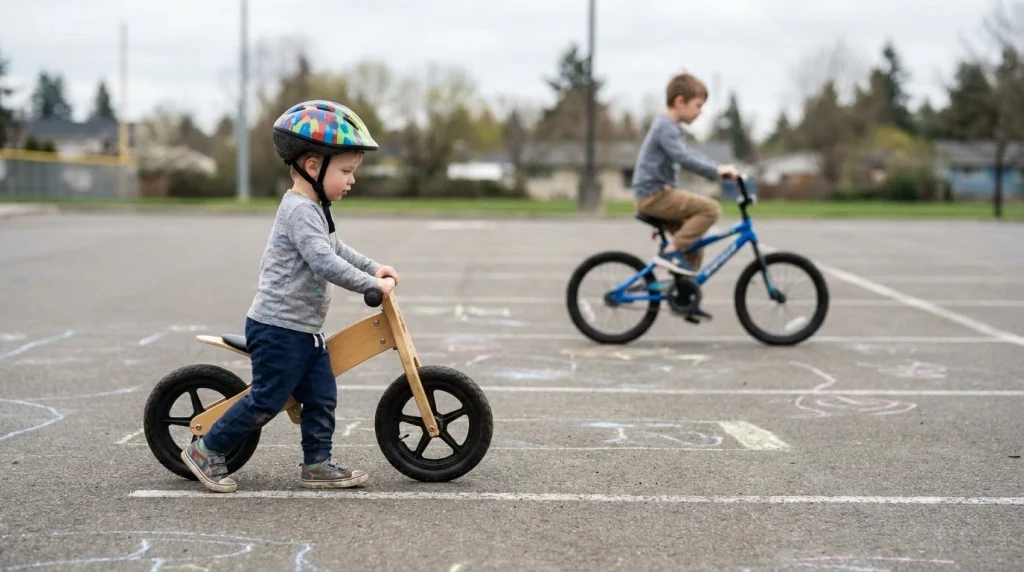
Children can develop bicycle riding skills gradually, with different types of bikes supporting different stages of learning.
The following table compares suitable learning activities across common childhood age groups.
| Age Group | Suitable Bike | Learning Goal |
|---|---|---|
| 2 to 3 years | Balance bike | Walking, steering, and basic balance |
| 4 to 5 years | Balance bike or pedal bike | Gliding and independent pedaling |
| 6 to 7 years | Pedal bike | Starting, stopping, and turning |
| 8 years and older | Size-appropriate beginner bike | Building or improving independent riding skills |
These age groups are flexible learning guidelines rather than fixed developmental requirements.
Can a 2-Year-Old Learn to Ride a Bike?
A 2-year-old may begin learning basic cycling movements using a properly sized balance bike.
A balance bike has no pedals and allows children to move by pushing against the ground. Young riders can explore steering and balance while keeping their feet within easy reach of the ground.
At this stage, the goal is comfortable movement rather than independent pedal cycling.
Can a 3-Year-Old Ride a Pedal Bike?
Some 3-year-olds may be ready for a pedal bike, particularly if they have developed balance through earlier practice.
However, a child who struggles to coordinate steering and pedaling may benefit from additional balance bike practice. There is no need to rush the transition.
Is 5 Years Old a Good Age to Learn Cycling?
Age 5 falls within the common learning range for children beginning independent bicycle riding.
Children who can glide, steer, follow instructions, and control their speed may be ready to combine these skills with pedaling.
Choose the learning method according to your child’s abilities rather than their birthday alone.
Is Age 8 Too Late to Learn to Ride a Bike?
Age 8 is not too late for a child to learn to ride a bicycle.
Older beginners can follow the same gradual learning process as younger children. They may prefer private practice sessions where they feel comfortable making mistakes.
A supportive environment helps children focus on progress instead of comparing themselves with experienced riders.
Signs Your Child Is Ready to Ride a Bike
Your child may be ready to learn bicycle riding when they demonstrate basic balance, coordination, attention, and interest in cycling.
Look for these practical signs before introducing a pedal bike:
- Physical balance: Your child can maintain an upright position while moving.
- Steering control: Your child can guide a balance bike around obstacles.
- Gliding ability: Your child can lift their feet while maintaining control.
- Leg coordination: Your child can perform alternating leg movements.
- Attention: Your child can listen and respond to simple directions.
- Confidence: Your child feels comfortable sitting on and moving a bicycle.
- Interest: Your child voluntarily wants to practice riding.
Readiness does not require perfect coordination. The purpose of practice is to develop skills gradually, without introducing more challenges than your child can manage.
Which Bike Should Your Child Learn On?
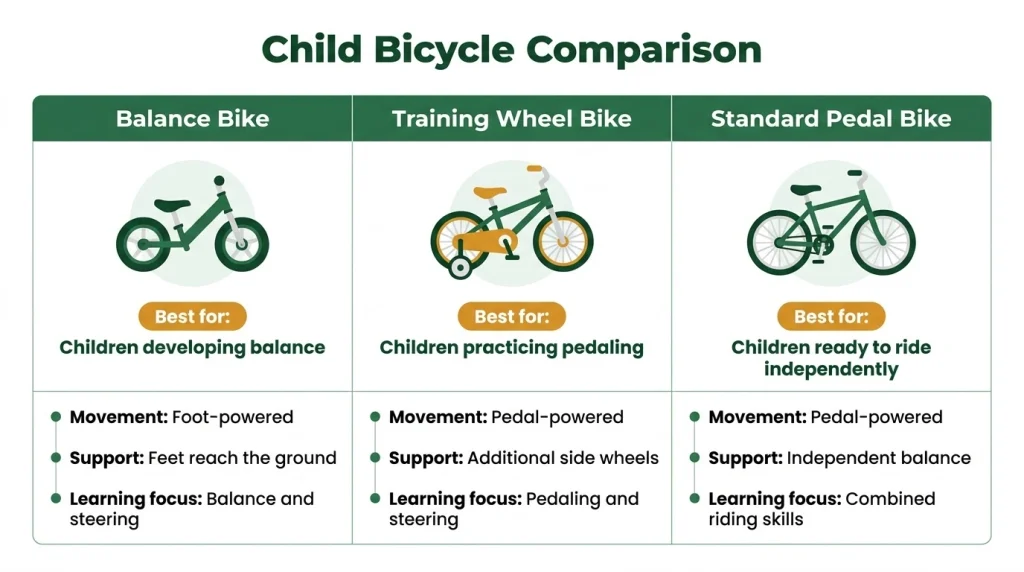
A suitable beginner bicycle matches your child’s balance, pedaling ability, physical size, and confidence.
Balance bikes, bicycles with training wheels, and standard pedal bikes offer different learning experiences.
Balance Bike
Best for: Children developing balance
- Movement: Foot-powered
- Support: Feet reach the ground
- Learning focus: Balance and steering
Training Wheel Bike
Best for: Children practicing pedaling
- Movement: Pedal-powered
- Support: Additional side wheels
- Learning focus: Pedaling and steering
Standard Pedal Bike
Best for: Children ready to ride independently
- Movement: Pedal-powered
- Support: Independent balance
- Learning focus: Combined riding skills
Learning With a Balance Bike
A balance bike separates the challenge of balancing from the challenge of pedaling.
Children can begin by walking with the bicycle before progressing to longer pushes and controlled gliding. Once they feel comfortable balancing, they can practice combining balance with pedal movements.
Ireland’s Health Service Executive provides a practical balance bike learning method that breaks cycling into manageable stages.
Learning With Training Wheels
Training wheels allow children to practice pedaling without maintaining independent balance throughout the ride.
They may suit children who prefer additional stability while becoming familiar with bicycle controls. However, independent balancing still requires practice after the training wheels are removed.
Moving Directly to a Pedal Bike
A standard pedal bike can suit a child who already demonstrates controlled balance and steering.
Children with previous balance bike experience may find the transition manageable because they can concentrate on adding pedal movements.
For beginners who struggle, temporarily practicing without pedals can simplify the learning process.
How to Choose the Right Bike Size for a Beginner
The right beginner bike allows your child to reach the ground, handlebars, and braking controls comfortably.
Age alone cannot determine bicycle size because children of the same age may have different heights and body proportions.
Check the following features before beginning riding lessons:
- Your child can get on and off the bicycle comfortably.
- The handlebars are within easy reach.
- Your child can operate the available braking controls.
- The bicycle is manageable when walking or turning.
- The saddle height supports the intended learning method.
- The tires and brakes are in working condition.
For balance bike practice, adjust the saddle so your child can place both feet firmly on the ground with slightly bent knees.
Warning
An oversized bicycle can make stopping and balancing harder, increasing the risk of falls. Choose a bicycle your child can control now rather than one intended for future growth.
How to Help Your Child Start Riding a Bike
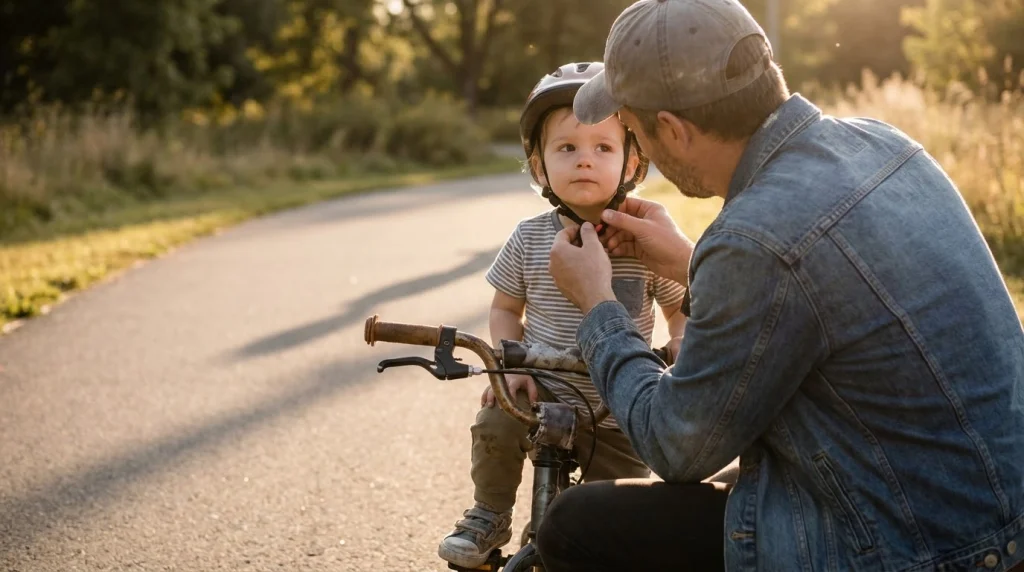
Teaching a child to ride a bicycle works well when you introduce individual riding skills before asking them to combine everything.
Begin with familiar movements, then introduce new challenges as your child becomes more comfortable.
Step 1
Prepare the Bicycle
Check the bicycle’s fit, tires, and brakes. Make sure your child wears a properly fitted helmet.
Step 2
Practice Basic Movement
Encourage your child to sit on the bicycle and push forward using their feet.
Step 3
Develop Balance
Introduce controlled gliding by encouraging your child to lift their feet briefly while moving.
Step 4
Introduce Steering and Stopping
Practice gentle turns and controlled stops before introducing independent pedal riding.
Step 5
Add Pedaling
Introduce pedal movements once your child can maintain balance and steer comfortably.
Step 6
Build Independent Riding Skills
Continue practicing starts, stops, turns, and controlled riding in a supervised, traffic-free space.
Move to the next stage when your child demonstrates control and feels comfortable. Progress does not need to follow a fixed schedule.
How Long Does It Take a Child to Learn to Ride a Bike?
The time required to learn bicycle riding depends on a child’s previous experience, coordination, confidence, and opportunities to practice.
A child who already feels comfortable gliding may progress more easily to pedaling. Another child may need additional opportunities to practice individual movements.
Measure progress through improvements in control rather than the number of practice sessions completed. Finish a session when your child becomes tired, distracted, or frustrated.
What If Your Child Is Afraid to Ride a Bike?
A child who fears riding a bicycle may benefit from smaller learning goals and a less demanding practice environment.
Begin with activities that feel manageable, such as walking beside the bicycle or sitting on it with both feet touching the ground.
- Ask your child what makes them uncomfortable.
- Allow them to choose when to practice.
- Return to familiar balance exercises.
- Recognize small improvements.
- Avoid comparisons with other children.
- Stop when your child wants a break.
Children with persistent movement or coordination difficulties may benefit from guidance from a pediatrician or pediatric physical therapist.
Common Mistakes Parents Make When Teaching Cycling
Common bicycle teaching mistakes include rushing the learning process, choosing unsuitable equipment, and introducing difficult riding conditions too early.
Starting Before Your Child Is Ready
Introducing pedal cycling before your child develops basic coordination can make practice frustrating.
Allow time for balance and steering exercises before expecting independent riding.
Focusing Only on Pedaling
Pedaling alone does not teach a child how to maintain balance or stop safely.
Include steering, controlled stopping, and speed management throughout the learning process.
Practicing in Unsuitable Locations
A busy or uneven practice area can introduce unnecessary challenges for beginner cyclists.
Choose an open, smooth, level area away from moving vehicles and other traffic.
Comparing Children With Other Riders
Comparing your child with more experienced riders can create unnecessary pressure.
Celebrate individual progress, including improved steering, longer controlled glides, and more confident starts.
Essential Safety Rules for Young Bicycle Riders
Young cyclists need suitable protective equipment, adult supervision, working bicycle controls, and a safe practice environment.
The American Academy of Pediatrics offers additional child bicycle safety guidance for parents introducing cycling.
- Use a properly fitted bicycle helmet for every ride.
- Choose a helmet that meets applicable CPSC safety standards.
- Check the bicycle’s brakes, tires, and steering.
- Keep loose clothing and shoelaces away from moving parts.
- Have your child wear closed-toe shoes.
- Supervise young children in traffic-free areas.
- Teach controlled stopping before increasing riding speed.
Independent bicycle riding does not automatically mean a child is ready to cycle near road traffic. Road safety requires additional awareness, judgment, and supervision.
As an Amazon Associate, this site earns from qualifying purchases.
Kids Balance Bikes
A properly sized balance bike allows your child to practice steering and balancing before learning to pedal.
Frequently Asked Questions
Can children learn cycling without using training wheels?
Children can learn bicycle riding without training wheels by developing independent balance before introducing pedal movements. A balance bike provides an opportunity to practice these skills separately. Children who already own a suitable pedal bicycle may practice balancing after its pedals are removed correctly.
Can siblings help teach a child bicycle riding?
Older siblings can help younger children become interested in cycling by demonstrating simple movements and offering positive encouragement. However, an adult should remain responsible for supervision, bicycle preparation, and safety. Siblings should avoid pushing the bicycle or encouraging riding beyond the beginner’s ability.
Should children learn bicycle riding on grass?
A smooth, level, traffic-free paved surface generally makes bicycle balance practice easier than riding across thick or uneven grass. Grass can create rolling resistance that makes controlled gliding difficult. Choose an open practice area where your child has sufficient space to steer and stop comfortably.
Can a scooter prepare children for bicycle riding?
A scooter can help children become familiar with steering, movement, and balance, but bicycle riding requires additional seated balancing skills. A child who enjoys scooter riding may still need bicycle-specific practice. Introduce the bicycle gradually rather than assuming previous scooter experience guarantees independent riding.
Should children use knee pads when learning cycling?
Knee pads and elbow pads can provide additional protection during beginner bicycle practice, particularly for children who feel nervous about falling. Protective pads should fit comfortably without restricting movement. They complement, rather than replace, a correctly fitted bicycle helmet and a supervised practice environment.
Should parents hold the bicycle during riding lessons?
Parents can provide limited physical support during bicycle lessons, but children also need opportunities to experience and correct their own balance. Excessive support may prevent independent balancing practice. Stay close enough to supervise while allowing your child to develop controlled movements at a comfortable pace.
Conclusion
The best age for a child to learn to ride a bike is generally between 4 and 7, although individual readiness matters more than age. If your child shows interest but struggles with independent riding, begin with a properly fitted balance bike and progress gradually.
