
Can a 1-Year-Old Ride a Bicycle? Parent Safety Guide
Quick Answer
Can a 1-year-old ride a bicycle? Most one-year-olds are not ready to ride a traditional pedal bicycle independently. They can begin developing cycling skills through age-appropriate activities. A developmentally ready toddler may also travel in a suitable bicycle trailer or rear-mounted child seat with proper safety equipment.
- Traditional pedal bicycles are unsuitable for most one-year-olds.
- Early riding activities should match the child’s physical development.
- Bike passengers must have sufficient head and neck control.
- A properly fitted bicycle helmet and adult supervision are necessary.
Watching your toddler take their first steps may leave you wondering whether they are ready for their first bicycle. However, learning to walk and learning to ride require different physical skills.
This guide explains suitable riding options for one-year-olds, signs of physical readiness, bicycle safety requirements, and when to introduce independent cycling.
Can a 1-Year-Old Ride a Bicycle Independently?
A one-year-old generally lacks the balance, strength, and coordination needed to operate a conventional bicycle safely. Pedaling, steering, balancing, and stopping require several movements to work together.
According to the American Academy of Pediatrics, children should not be pressured into riding a conventional two-wheeled bicycle before they are developmentally ready.
Its bicycle sizing and readiness guidance places typical readiness for this type of riding around ages five or six.
That does not mean younger children cannot develop skills that will eventually help them ride. The appropriate starting point depends on their abilities and the equipment being considered.
Why Are One-Year-Olds Not Ready for Pedal Bikes?
One-year-olds are still developing the physical abilities required for controlled bicycle riding. Standing or walking independently does not automatically indicate readiness to operate a bicycle.
Balance and Body Control
Independent bicycle riding requires a child to maintain balance while sitting, moving, and changing direction. A young toddler may still struggle to remain stable during ordinary movement.
Adding wheels and forward motion increases the difficulty. Children need time to develop the body control required for more advanced activities.
Pedaling and Steering Coordination
Pedaling a bicycle requires coordinated leg movement while the hands control direction. A child must also adjust their body position as the bicycle moves.
These combined tasks are more demanding than walking or playing with stationary toys.
Stopping and Recognizing Hazards
Safe bicycle riding requires the ability to stop and respond to obstacles. One-year-olds cannot be expected to recognize hazards or respond consistently to safety instructions.
Parents must therefore control the riding environment rather than rely on the toddler to avoid danger.
What Types of Bikes Are Suitable for a One-Year-Old?
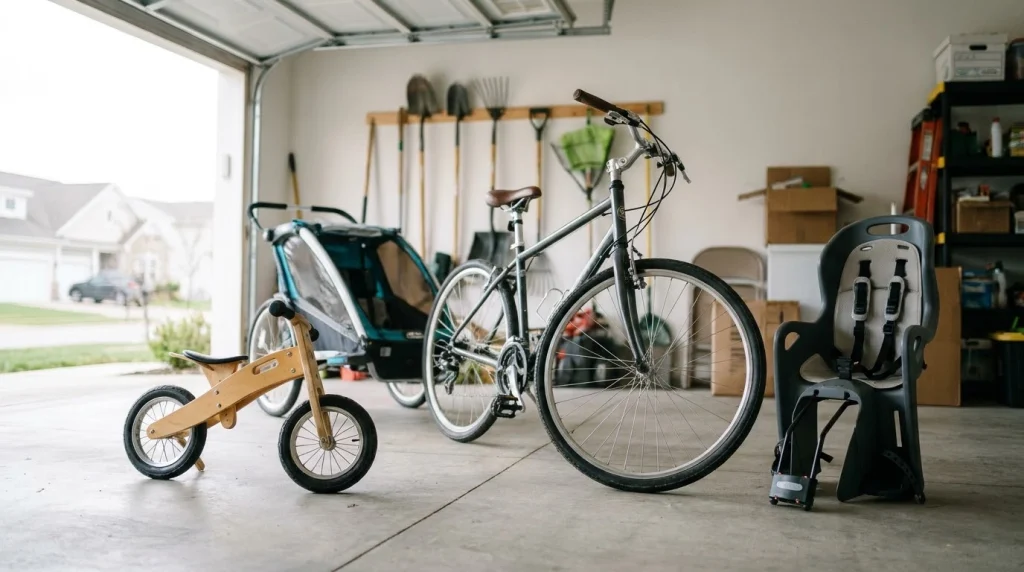
Suitable options depend on whether your toddler will participate as a passenger or use developmentally appropriate riding equipment. A product’s age rating alone does not establish individual readiness.
The following table compares common riding options and their suitability for one-year-olds.
| Riding Option | Suitability | Main Requirement |
|---|---|---|
| Traditional pedal bike | Not recommended | Advanced coordination |
| Balance bike | Depends on development and product requirements | Independent balance and foot control |
| Pedal tricycle | Generally better for older toddlers | Pedaling and steering ability |
| Bicycle trailer | Conditional passenger option | Physical readiness and proper restraints |
| Rear-mounted child bike seat | Conditional passenger option | Neck strength and secure installation |
Independent riding and passenger riding have different safety requirements, so choose equipment according to its intended purpose.
Can a 1-Year-Old Use a Balance Bike?
A balance bike may become an appropriate option when a toddler develops sufficient stability and meets the manufacturer’s minimum age and size requirements.
A balance bike is a bicycle without pedals. The rider moves by pushing against the ground with their feet rather than turning pedals.
Removing pedals simplifies the riding process, but children must still control the handlebars, maintain stability, and stop their movement.
A child who has only started walking should not be rushed into using a two-wheeled balance bike. Allow basic movement skills to develop before introducing more demanding riding activities.
Signs Your Toddler May Be Ready
Physical readiness depends on your toddler’s ability to control their body and interact safely with the intended riding equipment.
Consider the following abilities before introducing a balance bike:
- Walking independently with steady body control.
- Maintaining an upright seated position.
- Holding handlebars comfortably.
- Reaching the ground with both feet.
- Supporting and controlling the equipment.
- Moving without frequent loss of balance.
These observations are not a medical readiness test or a guarantee of safe riding. The equipment’s instructions and your child’s individual development remain important.
Warning
Never place a toddler on oversized riding equipment. Poor fit can prevent effective movement control and make falls harder to avoid.
Can a One-Year-Old Ride a Tricycle?
A conventional pedal tricycle is generally more appropriate for children who have developed the coordination needed to steer and pedal independently.
Three wheels provide a wider base than a conventional bicycle. However, a tricycle still requires the rider to control movement and direction.
Some toddler products resemble tricycles but operate as adult-controlled transport equipment. These products should not be confused with independent pedal tricycles.
Always check the intended use, age restrictions, weight limits, and restraint requirements before placing your child on any riding product.
Can a 1-Year-Old Ride as a Bicycle Passenger?
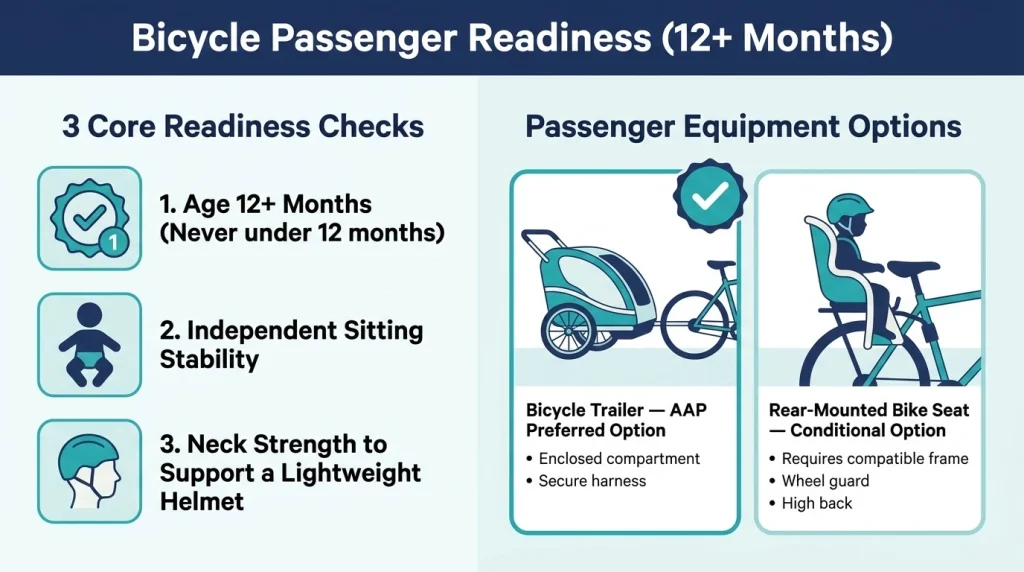
A one-year-old may travel as a bicycle passenger when they have adequate physical development and use appropriate safety equipment.
The American Academy of Pediatrics advises against carrying infants younger than 12 months on bicycles. Reaching that age does not automatically establish readiness.
According to its child bicycle passenger safety guidelines, suitable passengers need independent sitting ability and enough neck strength to support a lightweight helmet.
Bicycle Trailers for Toddlers
A child bicycle trailer is a passenger compartment pulled behind an adult bicycle. The American Academy of Pediatrics favors trailers over bicycle-mounted seats when transporting young children.
Before using a trailer, confirm that your child meets its passenger requirements. Check the connection to the bicycle and secure the child according to the manufacturer’s instructions.
Rear-Mounted Child Bicycle Seats
A rear-mounted bicycle seat allows a suitable toddler to travel behind an adult cyclist. Its attachment system must be compatible with the bicycle.
Look for secure restraints, adequate back support, and protection against contact with moving wheels. Carrying a passenger changes the bicycle’s handling and stopping behavior.
Ask your child’s pediatrician about bicycle passenger readiness if you have concerns about their physical development, neck strength, or ability to sit independently.
How to Choose Between a Bike, Trailer, and Child Seat
The right riding option depends on your child’s abilities and whether you want independent play or adult-controlled transportation.
If you
Want to take a developmentally ready toddler on family bicycle rides.
Choose a suitable child bicycle trailer, because it is the preferred passenger option in AAP guidance.
If you
Have a toddler who is still learning to walk steadily.
Choose supervised movement activities without a bicycle, because basic body control comes before independent riding.
If you
Want to introduce independent riding when your child is physically ready.
Choose age-appropriate equipment, because correct fit and manageable movement support learning.
Does a 1-Year-Old Need a Bicycle Helmet?
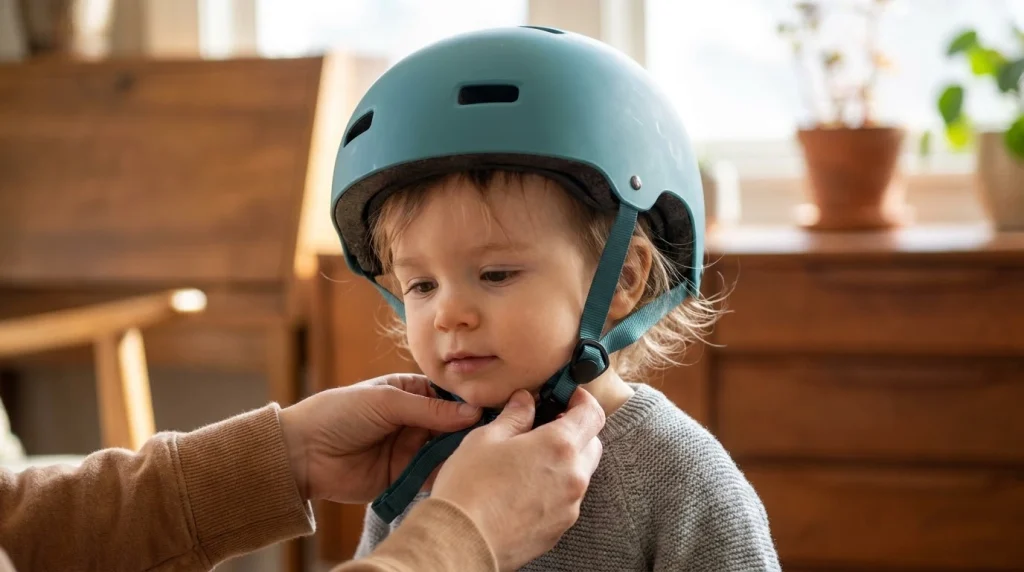
A developmentally ready one-year-old traveling as a bicycle passenger needs a properly fitted bicycle helmet. Children participating in age-appropriate bicycle riding also require suitable head protection.
The helmet should comply with applicable Consumer Product Safety Commission bicycle helmet standards and be appropriate for the child’s age.
Follow these helmet fitting recommendations:
- Position the helmet level on the child’s head.
- Keep the upper forehead covered.
- Adjust the chin strap securely.
- Check that the helmet does not shift over the eyes.
- Confirm that the helmet meets the applicable safety standard.
The American Academy of Pediatrics provides additional child bicycle helmet guidance for parents choosing and fitting protective equipment.
A helmet helps protect the head, but it cannot compensate for unsuitable equipment or inadequate physical development.
Where Can Toddlers Participate in Riding Activities?
Toddlers should participate in age-appropriate riding activities away from moving vehicles and under direct adult supervision.
Choose a controlled environment that allows you to monitor your child closely. Avoid locations where a toddler could roll into traffic or encounter sudden obstacles.
Do
- Choose flat areas separated from traffic.
- Maintain close adult supervision.
- Inspect equipment before use.
Avoid
- Busy roads and active driveways.
- Steep slopes and uneven terrain.
- Unsupervised riding activities.
When carrying a toddler as a passenger, choose quiet routes and avoid poor weather. Adjust your riding behavior to account for the additional passenger weight.
Common Mistakes Parents Make With Toddler Bikes
Common mistakes include introducing riding equipment before a child is ready, buying oversized bicycles, and treating protective equipment as a substitute for supervision.
Avoid the following practices:
- Buying a bicycle that the child needs to grow into.
- Assuming a birthday automatically establishes riding readiness.
- Using passenger equipment outside its approved limits.
- Skipping helmets during short rides.
- Carrying a toddler in an ordinary backpack while cycling.
- Encouraging independent riding before basic movement skills develop.
Let your child’s development determine the pace of learning. There is no need to introduce a pedal bicycle simply because other children have started using one.
How to Introduce Cycling as Your Child Gets Older
Introduce cycling gradually by matching each activity to your child’s growing physical abilities and understanding of safety.
- Encourage supervised walking and ordinary physical play.
- Observe how your child develops balance and coordination.
- Introduce suitable riding equipment when its requirements are met.
- Teach helmet use as part of every riding activity.
- Progress to more demanding equipment only after your child develops sufficient control.
Keep early learning activities enjoyable and free from pressure. If your child becomes uncomfortable or cannot control the equipment, stop and reconsider whether the activity is appropriate.
When Should You Wait Before Buying a Toddler Bike?
You should delay buying independent riding equipment if your toddler cannot meet its minimum requirements or control it safely.
There is little value in purchasing a bicycle that cannot be used safely at the child’s developmental stage. A correctly sized bicycle purchased later is a more practical choice.
If you plan to cycle with your toddler as a passenger, evaluate their readiness separately from their ability to ride independently.
As an Amazon Associate, we earn from qualifying purchases.
Child Bicycle Trailers
A suitable bicycle trailer provides a passenger option for developmentally ready toddlers who meet the manufacturer’s safety requirements.
Frequently Asked Questions
Can a 1-year-old ride a bike with training wheels?
Training wheels do not make a traditional pedal bicycle developmentally appropriate for a one-year-old who cannot pedal or steer safely. They provide additional support but do not remove the need for coordination. Wait until your child can manage the bicycle’s basic controls.
Is walking a requirement for riding as a passenger?
Independent walking is not the main requirement for a toddler to travel as a passenger in suitable bicycle equipment. Sitting stability and neck strength are more relevant to passenger readiness. Your child must also meet the equipment’s minimum age and size requirements.
Can twins ride together in a bicycle trailer?
Twins may travel together in a bicycle trailer specifically designed for multiple passengers if both children meet its individual requirements. Each child needs appropriate restraints and head protection. Follow the manufacturer’s passenger capacity, seating instructions, and combined weight limit before use.
Can I use a secondhand bicycle helmet?
A secondhand bicycle helmet is not recommended because its previous impact history and protective condition may be difficult to establish. A helmet can have damage that is not obvious during inspection. Choose a properly fitting helmet with an applicable bicycle safety certification.
Can a toddler sleep during a bicycle ride?
A toddler may fall asleep while traveling in suitable passenger equipment, so adequate support and secure restraints are particularly important. The equipment must support the child according to its instructions. Stop the ride if your child’s position or breathing appears compromised.
Should I buy a bike before my baby’s first birthday?
Buying a bicycle before your baby’s first birthday is unnecessary if the equipment cannot yet be used according to its requirements. Your child’s eventual size and physical abilities should guide the purchase. Waiting also allows you to assess the equipment’s actual fit.
Conclusion
Can a 1-year-old ride a bicycle? Independent pedal cycling is generally unsuitable at this age, although developmentally ready toddlers may participate in appropriate passenger riding. Choose equipment based on physical readiness, proper fit, and safety requirements rather than age alone.
