How to Teach a Child to Ride a Bike: 7 Simple Steps
Quick Answer
The easiest way to teach a child to ride a bike is to use the balance-first method. Lower the saddle, let your child practice pushing and gliding with their feet, and introduce pedaling once they can balance confidently. Choose a safe practice area and allow your child to progress at their own pace.
- Choose a properly sized bicycle.
- Practice balancing and gliding before pedaling.
- Teach controlled braking and steering.
- Introduce independent pedaling gradually.
- Keep practice sessions enjoyable and pressure-free.
Teaching your child to ride a bicycle does not need to be stressful or complicated. The easiest way to teach a child to ride a bike is to break the learning process into manageable skills. By focusing on balance, steering, braking, and pedaling separately, you can help your child become a more confident independent rider.
Why Is the Balance-First Method Easier for Children?
The balance-first method makes learning easier by separating balancing from pedaling. Children can concentrate on keeping the bicycle upright without managing several unfamiliar movements at once.
A balance bike is a bicycle without pedals that children move by pushing against the ground. A regular children’s bicycle with removable pedals can also serve the same purpose during practice.
As children gain confidence, they naturally begin lifting their feet and gliding. This movement helps them understand how their body position affects the bicycle.
The balance-first approach also encourages children to develop independent steering skills before they begin pedaling.
What Do You Need Before Teaching a Child to Ride?
Teaching a child to ride a bike requires suitable equipment, a safe learning environment, and a patient adult. Preparing these things before practice can prevent unnecessary frustration.
Choose the Right Bike Size
A properly sized bicycle allows your child to reach the handlebars, operate the brakes, and place their feet on the ground during balance practice.
A bicycle that is too large can make starting, stopping, and balancing more difficult. Avoid buying an oversized bicycle simply because your child will eventually grow into it.
Check the following before beginning:
- Your child can reach the handlebars comfortably.
- The bicycle does not feel difficult to move.
- Your child can reach and operate the brakes.
- The saddle can be adjusted to a suitable height.
- The bicycle has working brakes and secure components.
Use a Properly Fitted Bicycle Helmet
A properly fitted bicycle helmet helps protect your child’s head during falls. Choose a helmet that meets applicable bicycle helmet safety standards.
Follow the American Academy of Pediatrics bike and helmet fitting guidance when preparing your child’s equipment.
Secure footwear, comfortable clothing, and optional protective pads can also help children feel prepared for their lessons.
Find a Safe Place to Practice
A flat, open, traffic-free area gives beginners room to practice without worrying about vehicles or crowded surroundings.
Choose a suitable location where your child can move forward, turn, and stop without encountering obstacles.
- Empty paved recreation areas.
- Quiet, traffic-free park paths.
- Designated bicycle learning areas.
- Open areas with smooth, firm surfaces.
Avoid steep hills, loose gravel, busy roads, and slippery surfaces during the early learning stages.
How to Teach a Child to Ride a Bike Step by Step
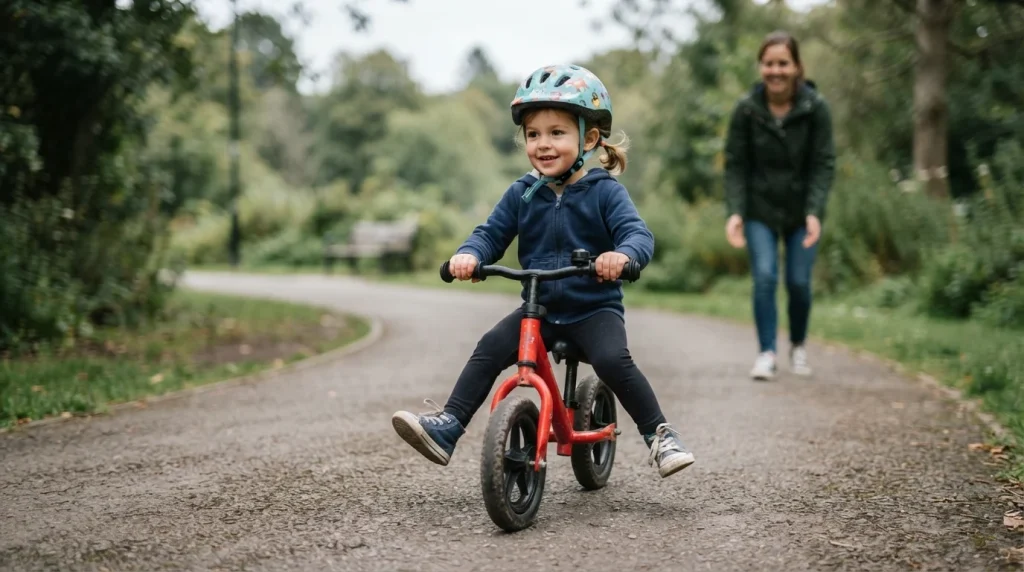
Teaching a child to ride a bike becomes more manageable when you introduce each riding skill separately. Begin with balance and gradually move toward independent cycling.
Step 1
Prepare the bicycle
Adjust the saddle so your child can comfortably reach the ground. Use a balance bike or remove the pedals from a suitable bicycle.
Step 2
Practice walking with the bicycle
Let your child sit on the saddle and move forward using their feet. Encourage relaxed arms and forward-facing eyes.
Step 3
Introduce gliding
Encourage your child to push forward and briefly lift their feet. Allow the gliding distance to increase as their balance improves.
Step 4
Practice steering and stopping
Introduce gentle turns and controlled stops. Make sure your child understands how the bicycle’s braking system works.
Step 5
Introduce the pedals
Move to a pedal bicycle or reinstall the pedals correctly. Help your child coordinate pushing off and beginning to pedal.
Step 6
Reduce physical support
Provide gentle support when needed. Gradually reduce assistance while keeping your child informed and staying close.
Step 7
Practice independent riding
Let your child practice starting, riding, turning, and stopping independently in a controlled environment.
The goal is consistent control rather than completing every step during a single lesson. Repeat earlier exercises whenever your child needs more practice.
How to Help a Child Balance on a Bicycle
Children learn bicycle balance by practicing controlled forward movement and making small steering adjustments. Gliding exercises allow them to develop these skills without worrying about pedals.
Encourage your child to look toward their destination rather than directly at the front wheel. Ask them to keep their shoulders relaxed and avoid gripping the handlebars too tightly.
Use simple activities to make balance practice enjoyable:
- Walk the bicycle toward a chosen landmark.
- Push forward using longer steps.
- Briefly lift both feet while gliding.
- Follow a gentle curved path.
- Practice stopping at a designated location.
Move to more challenging exercises only when your child feels comfortable with the previous activity.
Should You Use a Balance Bike or Training Wheels?
A balance bike is generally more suitable for teaching independent balance, while training wheels provide additional stability during early pedaling practice.
The following table compares how each learning method develops essential cycling skills.
| Learning Factor | Balance Bike | Training Wheels |
|---|---|---|
| Primary skill | Independent balance | Pedaling |
| Movement | Foot-powered | Pedal-powered |
| Balance assistance | Child controls balance | Additional wheels provide support |
| Steering practice | Independent steering and leaning | Supported steering |
| Next learning stage | Learning to pedal | Learning unsupported balance |
The balance-first approach is particularly useful for children who have difficulty keeping a bicycle upright without assistance.
Children who already use training wheels can transition to balance practice with a suitably adjusted bicycle.
How Do You Teach a Child to Pedal a Bike?
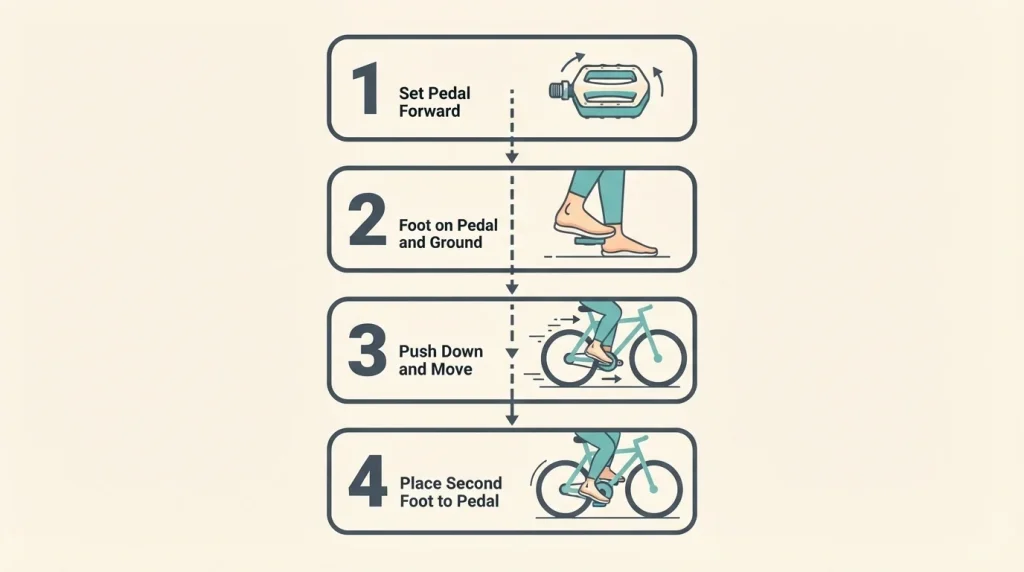
Teach pedaling after your child can glide comfortably and control the bicycle’s direction. This allows them to concentrate on coordinating their feet with the pedals.
Start by explaining how pushing a pedal moves the bicycle forward. Demonstrate the movement while the bicycle is stationary and securely supported.
When your child is ready to move:
- Position one pedal slightly forward and above its lowest point.
- Ask your child to place one foot on that pedal.
- Keep the other foot on the ground for stability.
- Encourage them to push down and move forward.
- Guide them to place the other foot on its pedal.
- Continue pedaling while looking ahead.
Practice the starting movement separately until your child can repeat it comfortably. Independent starting is an important part of learning to cycle without adult assistance.
How Should You Support a Child While Learning?
Support your child’s body gently rather than controlling the bicycle throughout the lesson. Constantly steering or stabilizing the bicycle can prevent children from experiencing independent balance.
Stay close enough to provide assistance when necessary. Explain how you will help before each attempt so your child knows what to expect.
The NHS occupational therapy cycling guidance recommends gradually reducing physical assistance while communicating clearly with the learner.
Encourage your child to make their own small adjustments instead of correcting every movement for them.
How Do You Teach a Child to Stop Safely?
Teach your child to slow down and stop before allowing longer independent rides. Controlled braking helps children manage their movement and avoid obstacles.
Explain whether their bicycle uses hand brakes or coaster brakes. Coaster brakes work when the rider presses the pedals backward.
Begin braking practice at walking speed. Ask your child to stop at a visible marker and place their feet down once the bicycle has slowed sufficiently.
Children should understand how their brakes respond before practicing at higher speeds.
Warning
Do not use downhill slopes to force a beginner to gain speed. Practice on level ground until your child can steer and stop reliably.
How Can You Help a Child Who Is Afraid of Riding?
Help a frightened child by reducing the difficulty of each exercise and allowing them to control their learning pace. Confidence should develop before more challenging riding tasks.
Some children worry about falling, losing control, or being unable to stop. A previous unpleasant experience can also make them hesitant to try again.
Use small, achievable activities to rebuild confidence:
- Let your child explore the bicycle without riding.
- Practice getting on and off comfortably.
- Allow both feet to remain close to the ground.
- Use familiar surroundings for practice.
- Praise specific improvements rather than speed.
- Stop when your child becomes overwhelmed.
Avoid comparing your child with siblings or other riders. Learning to cycle is an individual process, and pressure can make lessons less enjoyable.
How Long Does It Take a Child to Learn to Ride?
The time needed to learn bicycle riding varies with a child’s balance, coordination, confidence, previous experience, and opportunities to practice.
Children who already have balance bike experience may be familiar with several skills needed for pedal cycling. Other children may need more time to become comfortable with independent movement.
Instead of setting a deadline, measure progress through observable abilities.
- Moving forward without physical assistance.
- Gliding without immediately lowering the feet.
- Steering around simple obstacles.
- Starting to pedal independently.
- Stopping at an intended location.
Progress in any of these areas represents a useful improvement, even when your child cannot ride independently yet.
Common Mistakes When Teaching Kids to Ride a Bike
Common teaching mistakes include choosing unsuitable equipment, introducing too many skills together, and providing excessive assistance. Avoiding these mistakes can make practice more productive.
Do
- Introduce skills gradually.
- Use encouragement and simple instructions.
- Allow your child to control their progress.
Avoid
- Forcing practice when your child is upset.
- Using an oversized bicycle.
- Removing support without telling your child.
Give clear instructions focused on a single action. For example, ask your child to look ahead instead of giving several corrections simultaneously.
How Do You Know When a Child Can Ride Independently?
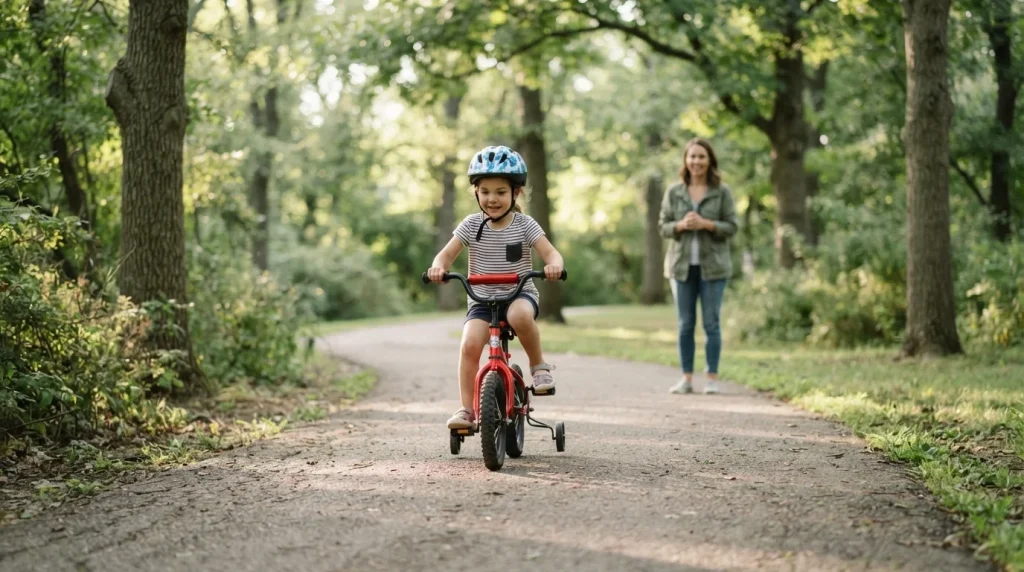
A child is ready for independent bicycle practice when they can start, maintain balance, steer, and stop without physical assistance in a controlled environment.
Look for consistent control rather than a single successful attempt. Your child should demonstrate these abilities repeatedly before moving to more challenging surroundings.
The Cycling UK learn-to-ride guidance emphasizes developing control over pedaling, balancing, steering, and stopping.
Continue adult supervision and introduce more complex riding situations gradually. Riding independently in a quiet practice area does not automatically mean a child is ready for road cycling.
Kids Balance Bikes
A balance bike provides a pedal-free way for children to practice steering, gliding, and independent balance.
Frequently Asked Questions
Can a child learn to ride without training wheels?
Children can learn to ride without training wheels by developing balance through foot-powered movement before progressing to independent pedaling. A balance bike or a suitable bicycle with removed pedals provides an opportunity to practice these skills without relying on additional wheels for stability.
Is grass or pavement better for learning?
Smooth pavement often makes rolling easier, while short, firm grass can feel more reassuring to children who worry about falling. Choose a level surface with enough traction and no traffic. Avoid uneven ground, deep grass, or surfaces where the bicycle wheels cannot move freely.
Should I hold the handlebars while my child rides?
Holding the handlebars throughout practice can interfere with a child’s ability to develop independent steering and balance control. Provide gentle body support when needed instead. Stay nearby and allow your child to make small steering adjustments while practicing in a suitable environment.
Can an older child use the balance-first method?
Older children can use the balance-first method with an appropriately sized bicycle adjusted for comfortable foot contact during practice. A separate balance bike is not necessary if a suitable pedal bicycle can be safely adapted. Focus on skill development rather than the child’s age.
Should a child practice riding a bike every day?
Children can practice bicycle riding regularly when they remain interested, comfortable, and physically ready to continue learning. Daily practice is not compulsory for developing cycling skills. Choose manageable sessions and allow breaks when your child becomes tired, frustrated, or less attentive.
What if my child cannot coordinate the pedals?
Children who struggle with pedal coordination may benefit from practicing the movement separately before combining it with balancing and steering. Demonstrate how downward pedal pressure moves the bicycle forward. If difficulties persist, consider assistance from a qualified cycling instructor or pediatric occupational therapist.
Can parents teach cycling without knowing how to ride?
Parents who cannot ride a bicycle can still help children practice basic balance activities in a suitable learning environment. However, professional instruction may be useful when teaching independent pedaling, braking, and steering. Learning alongside your child can also make practice a shared activity.
Conclusion
The easiest way to teach a child to ride a bike is to develop balance before introducing pedaling. Begin with a properly fitted bicycle, practice gliding on level ground, and introduce new skills as confidence improves. Prioritize controlled movement and enjoyable lessons rather than learning speed.
