Should a 2-Year-Old Know How to Ride a Bike? Parent Guide
Quick Answer
Should a 2-year-old know how to ride a bike? No, riding a bicycle is not an expected developmental milestone at age two. Some toddlers are ready to explore a balance bike, while others need more time. Physical coordination, confidence, interest, and proper bike fit matter more than age alone.
- Independent bicycle riding is not required at age two.
- A balance bike can introduce basic riding skills.
- Toddlers should learn at their own pace.
- A properly fitted helmet and adult supervision are necessary.
- Pedal bikes can wait until your child develops sufficient control.
Watching another toddler ride a bicycle can make you wonder whether your child should already know how to ride. However, learning to ride involves several physical and coordination skills that develop at different rates.
Understanding toddler bike readiness helps you choose suitable equipment, introduce riding safely, and avoid putting unnecessary pressure on your child.
Is Riding a Bike a Developmental Milestone at Age Two?
Riding a bicycle is not a standard developmental milestone for a 2-year-old child.
The Centers for Disease Control and Prevention provides a developmental milestone checklist that includes running, kicking a ball, and walking up steps with or without assistance.
Independent bicycle riding does not appear on that checklist. A toddler who cannot ride a bike may still be developing normally.
Learning to ride requires several abilities to work together:
- Maintaining body balance while moving.
- Coordinating leg movements.
- Holding and turning handlebars.
- Recognizing obstacles.
- Controlling movement and stopping.
- Feeling comfortable on a moving bicycle.
Your child does not need to master these cycling skills by a particular birthday. Treat early bicycle practice as an optional play activity rather than a developmental test.
Can a 2-Year-Old Learn to Ride a Bike?
Some 2-year-olds can begin learning basic bicycle skills, particularly with a properly fitted balance bike.
A toddler may start by sitting on the seat, walking forward, and pushing against the ground. With practice, some children become comfortable lifting their feet briefly while moving.
These early movements are different from independently riding a traditional pedal bicycle. Pedaling adds another task that children must coordinate with steering and balance.
The appropriate starting point depends on the child’s physical abilities, willingness to participate, and ability to control the bike.
What Bike Riding Skills Can a 2-Year-Old Learn?
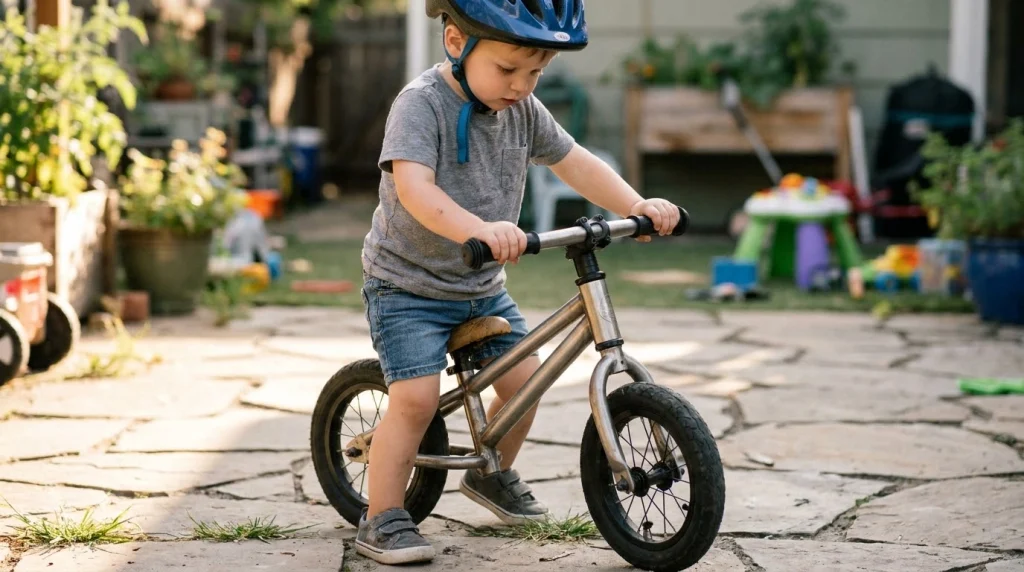
A 2-year-old can explore basic riding movements without needing to pedal or balance independently.
The following stages describe possible learning activities rather than required milestones.
Step 1
Explore the bicycle
Let your child become familiar with the seat and handlebars before attempting to move.
Step 2
Sit with feet on the ground
Encourage your toddler to sit comfortably while keeping both feet firmly on the ground.
Step 3
Practice walking forward
Allow your child to move the balance bike forward using their feet at a comfortable pace.
Step 4
Practice steering and stopping
Introduce gentle turns and controlled stops before encouraging faster movement.
Step 5
Allow natural gliding
Let your child briefly lift their feet when they feel confident and can maintain control.
Children do not need to complete every stage at age two. Repeating an earlier stage is perfectly acceptable.
Signs Your 2-Year-Old Is Ready for a Bike
A toddler may be ready to explore bicycle riding when they show interest and can manage the basic movements needed to control the equipment.
Comfortable walking and standing
Comfortable walking and standing provide a useful foundation for moving a balance bike. Your child should feel secure enough to support themselves while exploring the bike.
Interest in riding toys
Interest in bicycles and ride-on toys can indicate that your toddler is willing to try riding.
Watch whether your child approaches the bicycle willingly or enjoys pretending to ride. Curiosity offers a natural opportunity to introduce basic practice.
Ability to reach the ground
A suitable balance bike allows your toddler to place both feet securely on the ground while seated.
This position lets children support their body weight and control forward movement without depending entirely on an adult.
Willingness to practice
A willing toddler may enjoy exploring a bicycle without needing encouragement to continue.
Readiness does not mean your child must ride independently. It means they can participate comfortably in an activity suited to their abilities.
What Type of Bike Is Suitable for a 2-Year-Old?
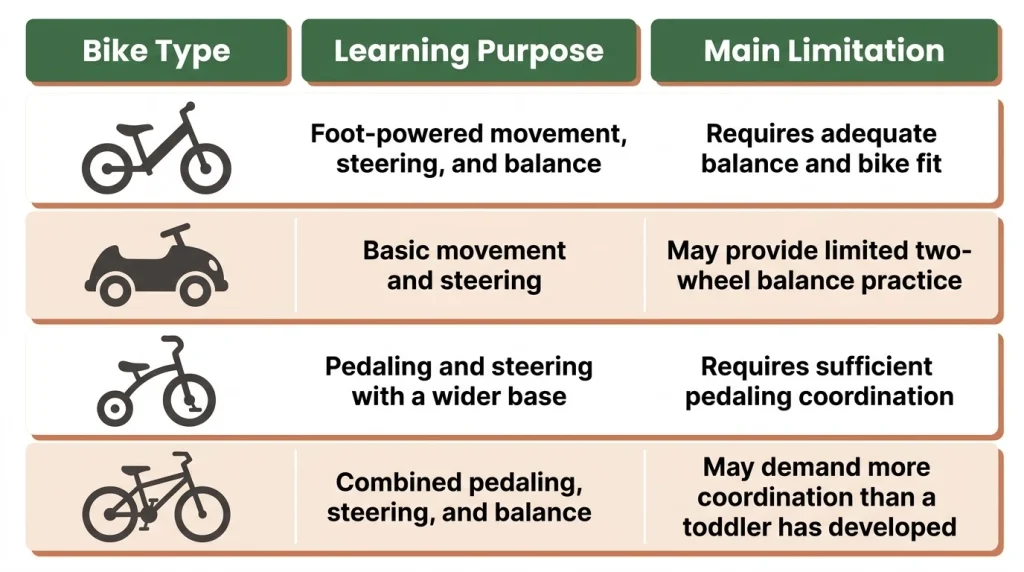
A balance bike is a practical option for toddlers who are physically ready to explore two-wheel riding.
Other riding toys may suit children who are not yet comfortable managing a bicycle. The following table compares common options by their learning purpose and limitations.
| Bike Type | Learning Purpose | Main Limitation |
|---|---|---|
| Balance bike | Foot-powered movement, steering, and balance | Requires adequate balance and bike fit |
| Ride-on toy | Basic movement and steering | May provide limited two-wheel balance practice |
| Tricycle | Pedaling and steering with a wider base | Requires sufficient pedaling coordination |
| Pedal bike | Combined pedaling, steering, and balance | May demand more coordination than a toddler has developed |
Choose equipment according to your child’s abilities rather than expecting your child to adapt to a particular bicycle.
Why Are Balance Bikes Useful for Toddlers?
Balance bikes allow toddlers to explore steering and two-wheel balance without coordinating pedals at the same time.
Children move forward by pushing their feet against the ground. As their control improves, they can gradually practice gliding.
Ireland’s Health Service Executive describes the balance bike learning method as a way to divide bicycle riding into smaller, manageable tasks.
Balance bike practice can focus on:
- Keeping the bicycle upright.
- Supporting body weight on the seat.
- Moving forward using the feet.
- Turning around gentle obstacles.
- Developing confidence with movement.
A balance bike is a learning option, not a requirement for healthy development. Your child can enjoy other forms of active play until bicycle riding becomes appealing.
How to Choose the Right Bike Size for a 2-Year-Old
The right balance bike size allows your toddler to sit comfortably, reach the handlebars, and place both feet firmly on the ground.
Age recommendations can help narrow your options, but physical fit should determine whether a specific bike is suitable.
Check the seat height
The balance bike seat should be low enough for your child to maintain secure ground contact with both feet.
A slight bend in the knees allows your child to push forward comfortably. Avoid selecting a bicycle that requires your toddler to stretch their legs just to reach the ground.
Check the handlebar reach
A suitable handlebar position allows your toddler to hold and turn the handlebars without excessive stretching.
Your child’s riding position should feel comfortable and controlled. Make sure adjustments remain within the bicycle manufacturer’s permitted settings.
Check the overall bike fit
A properly fitted bicycle should match your child’s current height and physical ability.
Follow the manufacturer’s age, height, weight, and assembly instructions. Do not rely on wheel diameter alone when determining whether a bicycle fits.
How to Teach a 2-Year-Old to Ride Safely
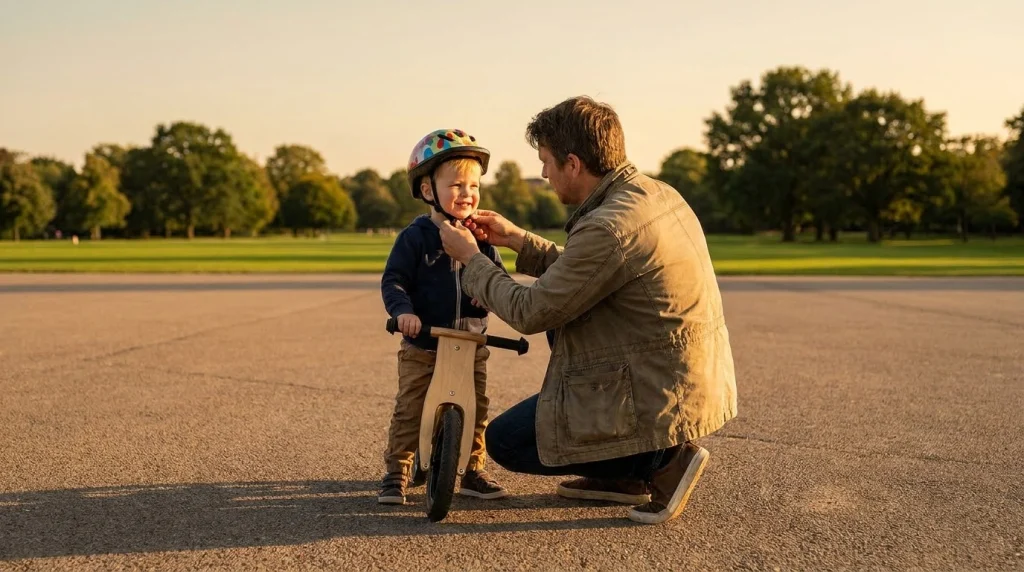
Teach a toddler to ride by introducing simple activities in a controlled environment with suitable safety equipment and close adult supervision.
The American Academy of Pediatrics recommends helmets and supervised riding away from streets in its first bicycle safety guidance.
- Choose a flat, open practice area away from vehicles.
- Fit an appropriate bicycle helmet before riding.
- Check the bicycle’s condition and adjustments.
- Allow your toddler to become comfortable while stationary.
- Encourage gentle movement without forcing speed.
- Introduce stopping and steering before gliding.
- End the activity when your child loses interest or control.
Stay close enough to intervene if your toddler approaches a hazard. Keep practice playful instead of treating it as a formal riding lesson.
Warning
Avoid practice areas near moving vehicles, stairs, and steep slopes. Toddlers may not recognize hazards or stop in time to prevent a collision.
Is It Normal for a 2-Year-Old to Refuse to Ride?
A toddler’s reluctance to ride a bicycle does not, by itself, indicate a developmental problem.
Some children prefer familiar activities. Others may feel uncomfortable when introduced to unfamiliar equipment or a moving seat.
Possible reasons for reluctance include:
- The bicycle does not fit comfortably.
- The child feels uncertain about balancing.
- The practice environment feels unfamiliar.
- The child prefers other outdoor activities.
- The child is not interested in learning yet.
Respond to reluctance by offering choices. Your toddler can explore the bicycle while stationary, return to familiar toys, or try riding another time.
Avoid using another child’s riding ability as a standard your toddler must meet.
When Should You Be Concerned About Bike Riding Ability?
Not riding a bicycle at age two is not, on its own, a reason to suspect a developmental delay.
Consider your child’s broader development instead of focusing on bicycle skills. Everyday movements provide more relevant information about development at this age.
Speak with your child’s pediatrician if your child has lost previously acquired skills, is missing expected developmental milestones, or shows movement difficulties that concern you.
A healthcare professional can assess whether developmental screening or additional support is appropriate. Bicycle practice should not replace that assessment.
When Can a Toddler Move to a Pedal Bike?
A toddler may be ready to explore pedaling after developing sufficient balance, steering control, and confidence.
Consider the following practical signs before introducing a pedal bicycle:
- Your child moves confidently on a balance bike.
- Your child can glide without immediately losing control.
- Your child can steer around simple obstacles.
- Your child can manage stopping appropriately.
- Your child wants to try pedaling.
These signs help guide the decision, but they are not a guarantee of readiness. The pedal bicycle must also fit correctly and match your child’s abilities.
There is no need to purchase a pedal bicycle simply because your toddler has reached a particular age.
Common Mistakes Parents Make With Toddler Bikes
Common toddler bike mistakes involve unsuitable equipment, excessive expectations, and introducing riding challenges before children develop adequate control.
Do
- Choose equipment that fits your child.
- Allow your toddler to learn gradually.
- Praise participation rather than riding speed.
Avoid
- Buying an oversized bicycle for future growth.
- Comparing progress with other toddlers.
- Encouraging speed before your child develops control.
Successful early bicycle practice does not require independent riding. A comfortable experience that encourages your child to participate willingly is a worthwhile outcome.
Toddler Balance Bikes
A properly fitted balance bike allows a ready toddler to explore foot-powered movement, steering, and balance without using pedals.
Frequently Asked Questions
Does every toddler need a balance bike?
Balance bikes are optional learning equipment, and toddlers do not need to use them to achieve normal physical development. Children can enjoy activities such as walking, running, and playing with balls. Introduce a balance bike only when your child shows suitable readiness and interest.
Should toddlers wear helmets on balance bikes?
Toddlers should wear properly fitted bicycle helmets whenever they use balance bikes, even during slow practice sessions. Choose a helmet that meets applicable US bicycle helmet safety standards. Check its position and fastening before each ride to make sure the helmet remains securely fitted.
How long should toddler bike practice last?
Toddler bicycle practice should continue only while the child remains comfortable, interested, and able to manage the activity safely. There is no required practice duration for a 2-year-old. Stop when your child becomes tired, frustrated, distracted, or unwilling to continue, rather than completing a fixed lesson.
Can a toddler skip the balance bike stage?
A toddler does not need to use a balance bike before eventually learning to ride a conventional pedal bicycle. Balance bikes are simply one method of introducing cycling skills. Families can choose another suitable learning approach when their child develops the necessary coordination, confidence, and interest.
Should I buy a bicycle before my child is ready?
Buying a bicycle before your toddler shows readiness is unnecessary, especially when the equipment does not fit their present size. You can introduce age-appropriate riding equipment when your child becomes interested. Waiting also allows you to select a bicycle that matches their physical abilities.
Can siblings help teach a toddler to ride?
Older siblings can demonstrate simple bicycle movements and make riding activities enjoyable, but a responsible adult should supervise the toddler. Encourage siblings to model calm riding instead of organizing races. Keep faster riders separated from the toddler’s practice area to reduce collision risks.
Conclusion
Should a 2-year-old know how to ride a bike? Bicycle riding is not an expected milestone at this age, and toddlers should learn according to their individual readiness. If your child shows interest, introduce a properly fitted balance bike with a helmet and close adult supervision.
