
How to Use a Towel to Teach a Child to Ride a Bike
Quick Answer
To use a towel to teach a child to ride a bike, place a folded bath towel across their chest and underneath their arms. Hold both ends from behind while walking alongside them. Provide gentle balance support as they pedal, gradually reducing assistance until they can ride independently.
- Choose a properly sized bicycle and a sturdy towel.
- Position the towel below the child’s armpits.
- Hold both ends securely without squeezing the chest.
- Let your child control the pedals and handlebars.
- Reduce support as their balance and braking improve.
Learning to ride a bicycle without training wheels can feel intimidating for young children. The towel method offers temporary physical support while allowing children to practice balancing, pedaling, and steering.
If your child struggles with confidence or you find holding the bicycle seat uncomfortable, this technique may help. Understanding proper towel placement and when to remove support makes the learning process more manageable.
What Is the Towel Method for Teaching Kids to Ride?
The towel method is a bicycle training technique that uses a folded towel to provide temporary support around a child’s upper body.
Instead of holding the bicycle frame or handlebars, a parent holds the ends of the towel while moving with the child. This allows the young rider to control the bicycle directly.
Bike Auckland’s towel technique guide describes how this approach can support children during the transition to independent cycling.
The towel is not a replacement for balance skills. Its purpose is to offer reassurance and limited assistance while the child learns to control their movements.
Why Does the Towel Method Help Children Learn?
The towel method allows children to experience bicycle movement while receiving gentle support from an adult.
Riding a bicycle requires coordination between the rider’s body, handlebars, and pedals. Beginners must learn how these movements work together without becoming overwhelmed.
A towel can help nervous children focus on riding rather than worrying about every small wobble.
Encourages independent balance
Towel-assisted cycling gives children more freedom to make their own balance adjustments because the adult does not need to control the handlebars.
As support decreases, the child becomes responsible for keeping the bicycle upright. These small adjustments are part of learning to ride independently.
Reduces fear of losing balance
Gentle support from a towel may reassure children who feel nervous about riding without training wheels.
Knowing that an adult is nearby can encourage a hesitant rider to attempt pedaling. However, a towel cannot guarantee protection against falls.
Allows a more comfortable teaching position
Holding a towel can allow parents to maintain a more upright posture than bending over a low bicycle saddle.
The adult must still be able to walk comfortably beside the bicycle and respond to sudden changes in direction.
What Do You Need Before Using the Towel Method?
You need a suitable towel, a correctly fitted children’s bicycle, protective equipment, and a traffic-free practice area.
- Bath or beach towel: A sturdy towel with enough length for comfortable gripping.
- Children’s bicycle: A bicycle the child can comfortably control.
- Bicycle helmet: A properly fitted helmet designed for cycling.
- Closed-toe shoes: Secure footwear that stays on during practice.
- Practice area: A level, open surface away from vehicles and obstacles.
- Working brakes: A braking system the child understands and can operate.
Check the bicycle before every practice session. Make sure the handlebars are secure, the tires are properly inflated, and the brakes work correctly.
How to Use a Towel to Teach a Child to Ride a Bike
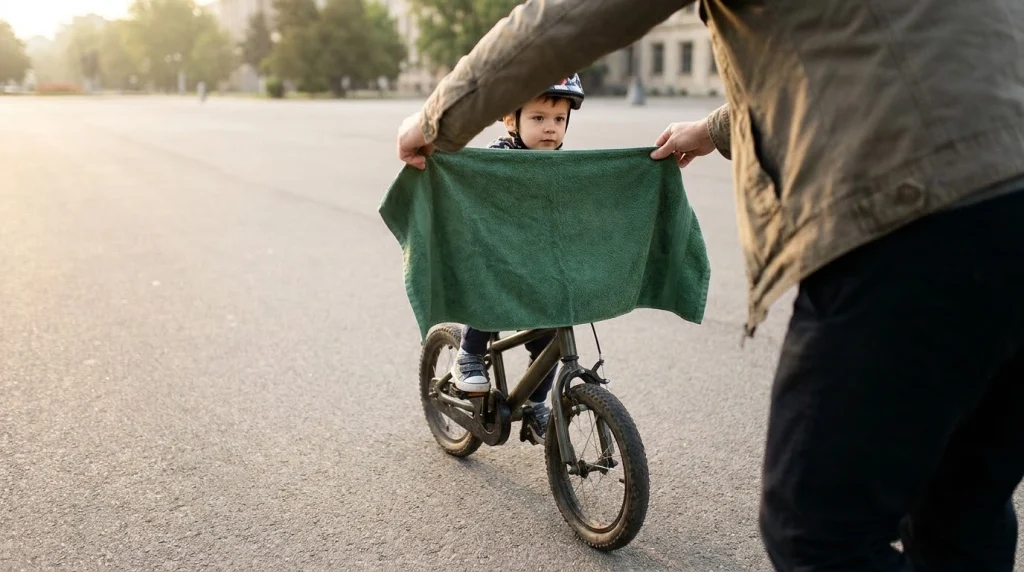
Use the towel method by preparing the bicycle, positioning the towel beneath the child’s arms, and gradually reducing assistance during controlled riding practice.
Step 1
Prepare the bicycle
Adjust the saddle so your child can comfortably reach the ground. Check the brakes and remove training wheels when the child is ready.
Step 2
Fold the towel
Fold a sturdy towel lengthwise into a broad strip. Make sure no excess fabric can reach the wheels, chain, or pedals.
Step 3
Position the towel
Place the folded towel across the child’s chest and beneath both arms. Bring the ends behind their body without restricting breathing or arm movement.
Step 4
Begin assisted pedaling
Hold both towel ends while your child starts pedaling slowly. Walk alongside them and allow the child to steer.
Step 5
Gradually decrease support
Reduce towel tension as the child becomes more stable. Practice steering, slowing down, and stopping before progressing.
Step 6
Remove the towel
Stop the bicycle completely before removing the towel. Begin independent riding practice while staying close enough to supervise.
Give your child enough time to become comfortable with each stage. Do not remove support simply because they can pedal in a straight line.
Independent starting, steering, and controlled stopping are also necessary skills.
Where Should You Place the Towel on a Child?
Place the towel across the child’s chest, underneath both armpits, with the ends extending behind their upper body.
The fabric should remain flat and comfortable against the body. The child must be able to breathe normally, move their arms, and reach the handlebars.
Hold the ends securely without tying them together. Maintain control of the fabric throughout the practice session.
Warning
Never wrap the towel around the child’s neck, tie it to their body, or allow loose fabric near moving bicycle parts.
How Much Support Should You Give With the Towel?
Provide only enough towel support to help your child manage minor balance difficulties while retaining control of the bicycle.
The child should remain seated on the saddle and support their own body weight. Avoid lifting them with the towel or pulling their body backward.
If your child leans heavily against the towel, stop and return to simpler balance exercises. Excessive assistance can prevent meaningful independent practice.
How to Teach Pedaling, Steering, and Braking
Towel-assisted bicycle practice should include starting, pedaling, steering, and braking rather than focusing exclusively on riding forward.
Practice controlled starting
Controlled starting helps children move the bicycle without depending entirely on an adult’s support.
Encourage your child to position a pedal where they can push down comfortably. Let them begin moving while you provide gentle support.
Practice looking forward
Looking ahead helps young riders direct their bicycle toward their intended path.
Encourage relaxed shoulders and hands. Avoid repeatedly correcting every small movement while your child is concentrating.
Practice gentle turns
Gentle turns help children coordinate steering with balance while maintaining control of the bicycle.
Begin with wide turns in an open area. Allow the child to choose a comfortable direction before introducing more challenging movements.
Practice controlled stopping
Controlled stopping teaches children to finish a ride without relying on an adult to catch or stop them.
Explain how their bicycle’s braking system works before riding. Practice stopping at low speeds and placing feet securely on the ground.
Cycling UK’s bicycle training guide provides additional instruction on developing independent riding and braking skills.
Towel Method vs. Training Wheels vs. Balance Bikes
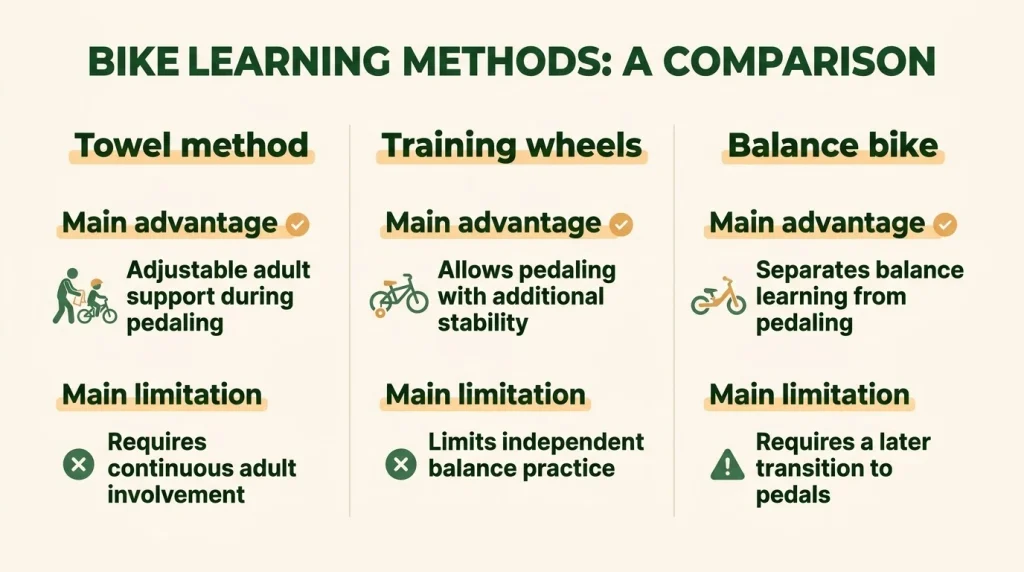
The towel method provides temporary adult assistance, training wheels provide mechanical stability, and balance bikes allow children to practice balancing without pedals.
The following table compares these approaches based on how children develop riding skills.
| Training method | Main advantage | Main limitation |
|---|---|---|
| Towel method | Adjustable adult support during pedaling | Requires continuous adult involvement |
| Training wheels | Allows pedaling with additional stability | Limits independent balance practice |
| Balance bike | Separates balance learning from pedaling | Requires a later transition to pedals |
Consider the towel method for a child who understands pedaling but needs additional confidence during independent balance practice.
For children struggling with basic coordination, the balance bike method offers a way to separate complex riding movements into simpler tasks.
Common Mistakes When Teaching With a Towel
Common towel training mistakes include providing excessive support, using unsuitable fabric, and progressing before the child can control the bicycle.
Do
- Practice at a manageable speed.
- Keep towel assistance gentle.
- Allow independent steering.
- Check your child’s comfort.
- Stop before removing the towel.
Avoid
- Lifting the child with the towel.
- Pulling sharply backward.
- Practicing near moving vehicles.
- Allowing fabric near the wheels.
- Forcing a frightened child to continue.
Parents should focus on building repeatable riding skills instead of rushing toward independent cycling.
When Is Your Child Ready to Ride Without the Towel?
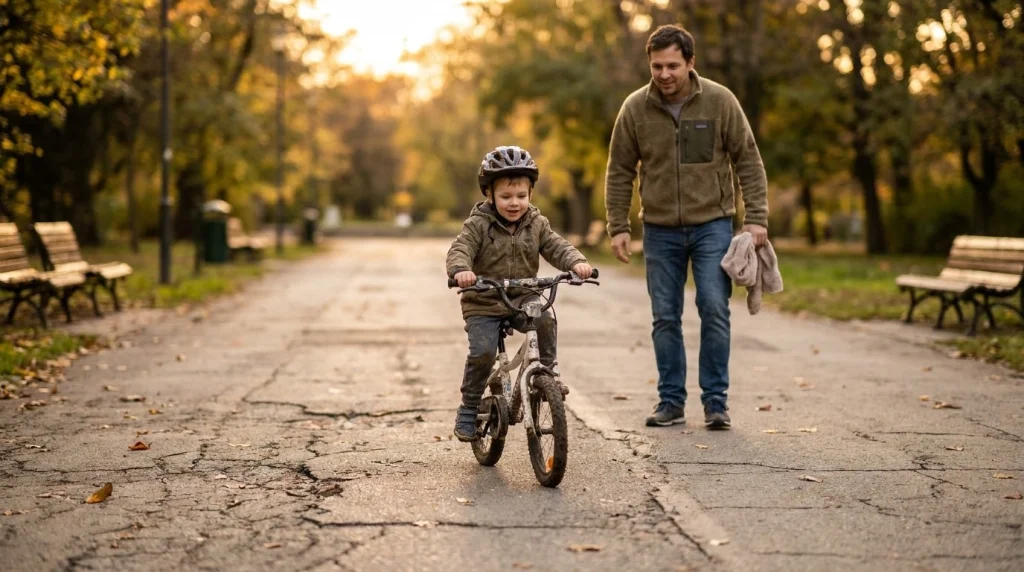
Your child is ready to practice without the towel when they demonstrate balance, steering, pedaling, and braking with minimal adult assistance.
Look for these signs during practice:
- Maintains an upright riding position without leaning on the towel.
- Pedals continuously at a controlled speed.
- Looks forward while riding.
- Makes gentle turns without losing control.
- Stops independently using the bicycle’s brakes.
- Feels comfortable attempting an unsupported ride.
Stop the bicycle before taking the towel away. Explain that you will remain nearby during the next attempt.
If your child struggles after removing the towel, return to assisted practice or simpler balance exercises.
How Long Does the Towel Method Take to Work?
The time needed to learn bicycle riding with a towel depends on the child’s balance, coordination, confidence, and previous cycling experience.
A child who already understands pedaling may progress differently from a complete beginner. There is no guaranteed training duration that applies to every child.
Use short, enjoyable practice sessions instead of setting a deadline. End the session when concentration or enthusiasm begins to decline.
What If Your Child Is Still Afraid of Riding?
If your child remains afraid of riding with towel assistance, reduce the difficulty and return to activities they can perform comfortably.
Ask what makes them nervous. They may be worried about falling, gaining speed, turning, or being unable to stop.
- Practice sitting on the bicycle with feet on the ground.
- Walk beside the bicycle while practicing brake control.
- Try balance exercises without pedaling.
- Use a familiar, quiet practice location.
- Recognize improvements without comparing children.
Children who experience persistent coordination difficulties may benefit from a qualified cycling instructor or an appropriate healthcare professional.
Frequently Asked Questions
Can you use a beach towel instead?
A sturdy beach towel can be used for bicycle training if it folds comfortably and remains clear of all moving components. Avoid towels that are excessively bulky or difficult to grip. Adjust the fold to suit the child’s body and your ability to maintain control.
Can grandparents use the bicycle towel method?
Grandparents can use the towel method if they can comfortably walk beside the bicycle and respond to the child’s movements. The technique still requires physical mobility and attention. Adults with mobility limitations may prefer help from another family member or a qualified cycling instructor.
Can siblings help with towel-assisted bicycle training?
Sibling involvement can make bicycle practice enjoyable, but a capable adult should manage the towel and supervise the training session. Younger siblings can encourage the rider from a safe position. They should remain outside the bicycle’s riding path to avoid unnecessary collisions or distractions.
Should children practice the towel method on grass?
A firm, level surface is generally easier for beginner bicycle practice because it allows predictable rolling and steering. Uneven or soft grass can make pedaling more difficult. Choose an open practice area with good visibility, sufficient space, and no vehicles or unexpected obstacles.
Can you use the towel method with a coaster brake?
The towel method can be used with a bicycle equipped with a coaster brake, which activates when the rider pedals backward. Teach the child how to operate that brake before assisted riding begins. Practice controlled stops at low speeds before reducing adult support.
Can a towel replace a bicycle training harness?
A towel can provide temporary hand-controlled assistance, but it should not be treated as equivalent to a purpose-designed bicycle training harness. Towels are not manufactured as fall protection equipment. Follow the manufacturer’s instructions if you choose a commercial training aid for your child.
Conclusion
Learning how to use a towel to teach a child to ride a bike can help you provide temporary support during balance and pedaling practice. Begin with gentle assistance, encourage independent bicycle control, and remove the towel after your child demonstrates reliable steering and stopping skills.
