How to Teach a 3-Year-Old to Ride a Bike: 7 Easy Steps
Quick Answer
The best way to teach a 3-year-old to ride a bike is to start with a properly fitted balance bike. Teach your child to walk, push, glide, steer, and stop before introducing pedals. Keep practice sessions short, provide encouragement, and let your child progress at their own pace without pressure.
- Choose a lightweight balance bike that fits your child.
- Provide a properly fitted bicycle helmet.
- Practice on a flat, traffic-free surface.
- Develop balance, steering, and stopping skills first.
- Introduce pedals only when your child is ready.
Teaching a 3-year-old to ride a bike can be an enjoyable experience when you focus on confidence rather than speed. At this age, children develop coordination, balance, and physical skills at different rates.
This guide explains how to introduce bicycle riding, develop essential skills, avoid common mistakes, and recognize when your child is ready for a pedal bike.
Is a 3-Year-Old Ready to Learn to Ride a Bike?
A 3-year-old can begin learning bicycle skills if they have sufficient physical coordination, show interest, and can comfortably manage an appropriately sized balance bike.
However, starting bicycle lessons does not mean your child must immediately ride a pedal bike independently. Learning to balance and control a bicycle is a useful starting point.
Look for these signs of readiness:
- Your child can walk and run confidently.
- They show interest in bicycles.
- They can follow simple instructions.
- They can sit comfortably on a balance bike.
- They can reach the ground with both feet.
- They are willing to practice without becoming distressed.
Age alone does not determine cycling readiness. Some children develop bicycle skills earlier, while others need additional time to feel comfortable.
The American Academy of Pediatrics recommends considering a child’s coordination and willingness before introducing independent bicycle riding. Its bicycle safety guidance also supports using balance bikes to introduce riding skills to young children.
Why Start With a Balance Bike?
A balance bike helps a 3-year-old develop bicycle control without needing to coordinate pedaling at the same time.
Balance bikes have no pedals. Children move forward by pushing their feet against the ground and gradually learn to lift their feet while moving.
This separates the process of balancing from the additional task of pedaling. Your child can concentrate on controlling the bicycle while keeping their feet available for support.
The main advantages of balance bike practice include:
- Developing independent balance.
- Learning to steer while moving.
- Building confidence with bicycle movement.
- Practicing controlled stopping.
- Preparing for a future pedal bike.
A balance bike is particularly useful for children who feel uncertain about lifting their feet from the ground. They can explore bicycle movement without being forced to pedal.
Balance Bikes vs Training Wheels for 3-Year-Olds
Balance bikes teach independent balancing, while training wheels provide external support during pedal practice.
The following table compares how each method introduces essential bicycle riding skills.
| Learning Skill | Balance Bike | Training Wheels |
|---|---|---|
| Balance | Develops independent balance | Provides external support |
| Pedaling | Introduced later | Practiced immediately |
| Steering | Practiced while balancing | Practiced with wheel support |
| Ground Access | Feet remain available for support | Feet normally remain on pedals |
| Learning Sequence | Balance before pedaling | Pedaling before independent balance |
For a beginner who is still developing coordination, the balance-first approach reduces the number of skills they need to learn simultaneously.
How to Choose the Right Bike for a 3-Year-Old
The right bicycle for a 3-year-old should allow comfortable ground contact, easy steering, and manageable movement without excessive effort.
Choosing a bicycle based only on the child’s age can result in a poor fit. Children of the same age may have different heights, leg lengths, and physical abilities.
Check the Seat Height
A beginner’s balance bike seat should allow the child to sit comfortably with both feet flat on the ground and their knees slightly bent.
This position helps the child push forward and regain stability. A seat that is too high can make the bicycle difficult to control.
Choose a Manageable Bike Weight
A manageable bicycle weight allows a young child to move, steer, and reposition the bike without struggling against its weight.
Watch how your child handles the bicycle while standing and sitting. They should be able to move it without depending entirely on adult assistance.
Check Handlebar Reach
The handlebars should allow your child to maintain a comfortable upright position without stretching their arms excessively.
Your child should be able to turn the handlebars in both directions without losing their seated position. Check that their hands can comfortably hold the grips.
The American Academy of Pediatrics provides additional bicycle fitting guidance and advises against purchasing oversized bicycles that children must grow into.
How to Teach a 3-Year-Old to Ride a Bike Step by Step

Teach your 3-year-old bicycle riding through a gradual sequence that begins with familiarization and progresses toward independent balance, steering, and controlled stopping.
Complete each stage at your child’s pace before introducing a more difficult skill.
Step 1
Introduce the Bicycle
Allow your child to explore the bicycle, hold the handlebars, and practice getting on and off while you supervise.
Step 2
Practice Walking With the Bike
Encourage your child to walk forward while sitting or standing over the bicycle. Let them become familiar with its movement.
Step 3
Introduce Seated Pushing
Ask your child to sit on the seat and push gently with alternating feet. Encourage them to look ahead.
Step 4
Develop Controlled Gliding
Let your child briefly lift their feet after pushing forward. Allow them to return their feet to the ground whenever needed.
Step 5
Practice Steering
Introduce gentle turns around widely spaced markers. Keep the bicycle moving at a speed your child can comfortably control.
Step 6
Teach Safe Stopping
Practice stopping gently with their feet at low speeds. Introduce the bike’s braking system when your child can operate it reliably.
Step 7
Consider Introducing Pedals
Consider a properly fitted pedal bike when your child demonstrates reliable balance, steering, stopping, and an interest in pedaling.
Your child does not need to complete every stage in the same practice session. Repeating a comfortable skill can help prepare them for the next stage.
Where Should a 3-Year-Old Practice Riding a Bike?
A flat, smooth, dry, and traffic-free area provides a suitable environment for a 3-year-old to practice beginner bicycle skills.
Choose an area with enough open space for gentle turns and controlled stopping. Stay close enough to intervene when necessary.
Suitable practice locations include:
- Empty paved play areas.
- Enclosed private courtyards.
- Traffic-free park areas where cycling is permitted.
- Level recreational spaces away from other moving bicycles.
Avoid steep slopes, loose gravel, wet pavement, active parking lots, and areas close to moving vehicles. These environments introduce challenges that a beginner may not be ready to manage.
Warning
Never use a downhill slope to help a beginner gain momentum. A young child who cannot control speed or stop reliably may lose control.
How Long Should Bicycle Practice Sessions Last?
Bicycle practice sessions should remain short enough to maintain your child’s interest, comfort, and willingness to continue learning.
Rather than following a strict schedule, observe your child’s behavior. Stop when they become tired, frustrated, distracted, or reluctant to continue.
End the session after an achievable activity, such as walking the bike independently or completing a gentle turn. Positive experiences can make your child more willing to practice again.
There is no guaranteed timeline for learning to ride a bicycle. Progress depends on physical readiness, bicycle fit, confidence, and opportunities to practice.
How to Help a 3-Year-Old Who Is Afraid of Riding
Help a child overcome bicycle fear by reducing the difficulty of the activity and allowing them to regain confidence through manageable tasks.
Start by letting your child stand beside the bicycle without expecting them to ride. They can then practice sitting, walking, or pushing forward when comfortable.
Use encouragement that recognizes specific achievements:
- You moved the bike by yourself.
- You kept your eyes looking forward.
- You stopped when you wanted to.
- You turned the handlebars carefully.
Avoid comparing your child with siblings or other children. Learning at a different pace does not mean your child is incapable of riding.
If your child refuses to continue, put the bicycle away and try again when they show interest. Riding should remain a positive activity.
Common Mistakes When Teaching a Toddler to Ride
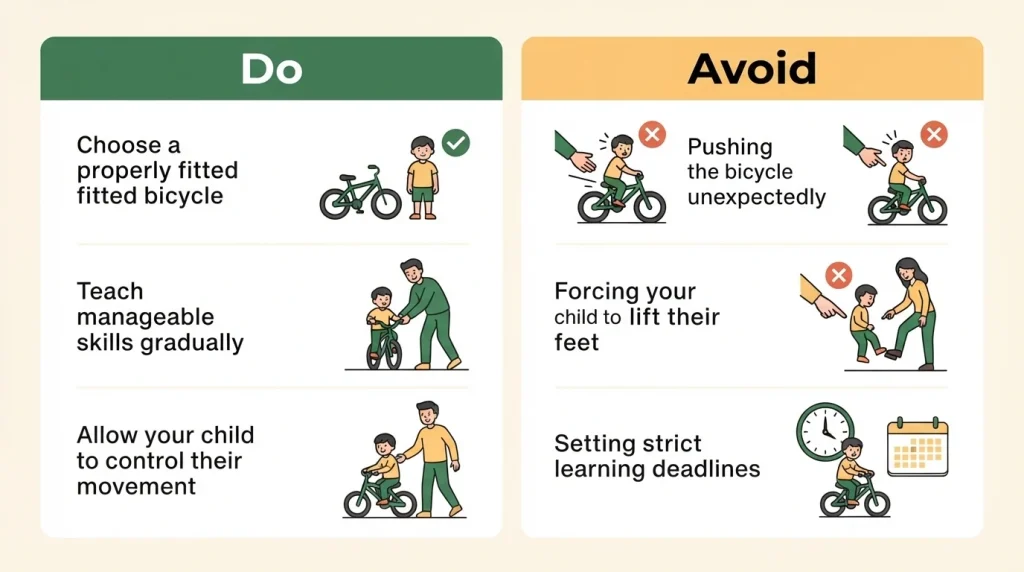
Common teaching mistakes include using an oversized bicycle, introducing pedals too early, providing excessive physical support, and continuing lessons after the child becomes frustrated.
Do
- Choose a properly fitted bicycle.
- Teach manageable skills gradually.
- Allow your child to control their movement.
Avoid
- Pushing the bicycle unexpectedly.
- Forcing your child to lift their feet.
- Setting strict learning deadlines.
Providing constant physical support can prevent your child from exploring independent balance. Stay nearby, but allow them to control the bicycle whenever they can do so safely.
When Should a 3-Year-Old Move to a Pedal Bike?
A child should move to a pedal bike when they demonstrate reliable bicycle control, sufficient physical coordination, and a genuine willingness to learn pedaling.
Look for the following abilities before considering the transition:
- Starting movement independently.
- Gliding without losing balance.
- Making controlled turns.
- Stopping reliably when needed.
- Following simple safety instructions.
- Operating the intended braking system.
These skills indicate progress, but they do not guarantee that a 3-year-old is ready for independent pedal riding. Continue using the balance bike if pedaling remains difficult.
When introducing pedals, practice starting and stopping in a controlled environment. Add new skills gradually rather than expecting immediate independent riding.
Essential Bicycle Safety Tips for 3-Year-Olds
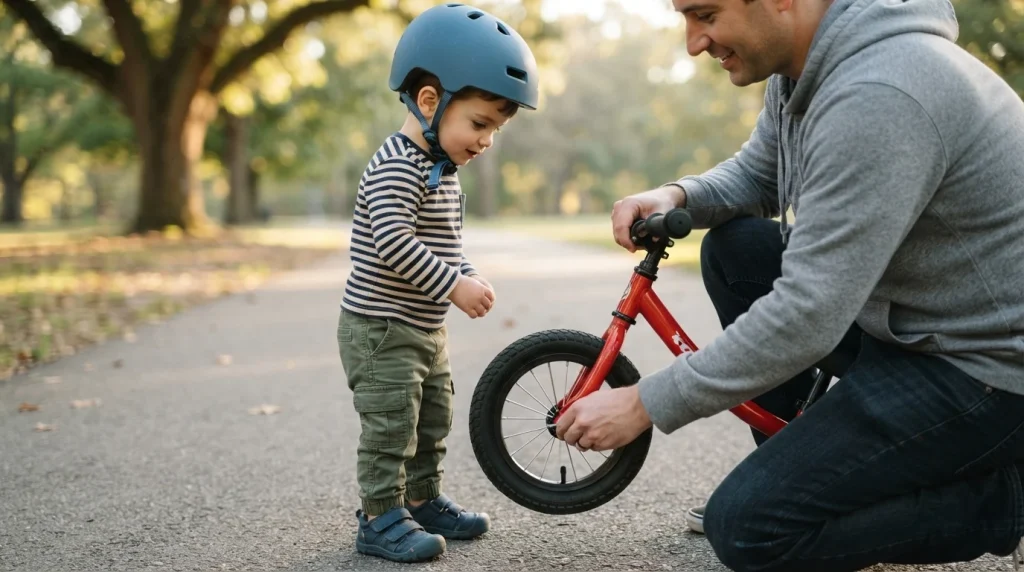
A 3-year-old learning to ride needs a properly fitted bicycle helmet, suitable footwear, a correctly adjusted bike, and continuous adult supervision.
Choose a bicycle helmet that meets applicable Consumer Product Safety Commission standards. The helmet should cover the forehead, remain level, and have a securely adjusted chin strap.
Follow the American Academy of Pediatrics’ helmet safety recommendations when selecting and fitting your child’s helmet.
Before each practice session:
- Check that the wheels are secure.
- Make sure the handlebars and seat are firmly attached.
- Inspect the tires for visible damage.
- Check the braking system if the bicycle has one.
- Provide closed-toe shoes.
- Fasten and check the helmet.
- Inspect the practice area for hazards.
Keep your child away from road traffic, regardless of their progress. The ability to balance and pedal does not mean they can recognize or respond to traffic hazards.
Kids Balance Bikes
A properly fitted balance bike allows young children to practice steering, pushing, and balancing before learning to pedal.
Frequently Asked Questions
Can I remove pedals from a regular kids bike?
A suitable pedal bicycle can sometimes be converted for balance practice by removing its pedals and adjusting the seat height. The bicycle must still allow comfortable ground contact and manageable steering. Ask a bicycle mechanic to check the conversion if you are unfamiliar with the process.
Should my child learn on grass or pavement?
A smooth, level paved surface generally allows a beginner to push and glide with less rolling resistance than grass. Uneven or soft grass can make movement difficult. Choose an enclosed practice area with no traffic, loose debris, steep slopes, or other hazards.
Can a tricycle prepare a toddler for bike riding?
A tricycle can introduce steering and pedaling movements, but it does not require the same balancing skills as a two-wheeled bicycle. Children who enjoy tricycles can continue using them under supervision. A balance bike offers a separate opportunity to practice independent bicycle balance.
What if my child keeps looking at their feet?
A child who constantly looks downward may benefit from practicing with a simple visual target positioned ahead of the bicycle. Encourage them to look toward the target while moving slowly. Avoid complicated instructions until they become comfortable steering and looking forward together.
Should I hold my child’s bicycle while they ride?
Adult support should help maintain safety without preventing a child from learning to control the bicycle independently. Stay close and offer assistance when needed. If your child depends on constant support, return to an easier activity that they can manage more comfortably.
Can siblings help teach a 3-year-old to ride?
Older siblings can demonstrate bicycle skills and encourage participation, but a responsible adult should supervise every practice session. Demonstrations should involve simple, controlled movements rather than fast riding or challenging tricks. Avoid turning bicycle practice into a competition between children.
Conclusion
The best way to teach a 3-year-old to ride a bike is to develop balance, steering, and stopping skills before introducing pedals. Start with a properly fitted balance bike in a traffic-free area, and let your child’s readiness guide each stage of learning.
