
How Long Does It Take a Child to Learn to Ride a Bike?
Quick Answer
How long does it take a child to learn to ride a bike? Some children learn during a single practice session, while others need several days, weeks, or months. Learning time depends on balance, coordination, confidence, previous cycling experience, bike fit, and regular practice.
- Children with balance bike experience may learn faster.
- Short, enjoyable practice sessions encourage progress.
- Balancing, pedaling, steering, and braking develop at different rates.
- Proper bike fit makes learning easier.
- There is no fixed deadline for learning to ride.
Teaching your child to ride a bicycle can be an exciting experience, but learning does not always happen quickly. Some children begin pedaling independently during their first lesson, while others need more opportunities to build confidence.
Understanding the learning process helps you set realistic expectations, recognize progress, and choose the right approach for your child.
How Long Does It Take Kids to Learn to Ride a Bike?
Children may learn to ride a bicycle within a single lesson or require several weeks of regular practice. Children who experience difficulties with balance or confidence may need longer.
The amount of time also depends on what you consider learning to ride. Pedaling independently across a short distance is different from controlling a bicycle confidently.
According to Cycle Sprog’s cycling guidance, previous experience, coordination, and confidence influence how quickly children develop independent riding skills.
The following table shows possible learning timelines based on a child’s starting point. These are examples rather than guaranteed learning periods.
| Starting Point | Possible Learning Time | Main Challenge |
|---|---|---|
| Experienced balance bike rider | One session to several sessions | Pedaling |
| Complete beginner | Several days to weeks | Balance and coordination |
| Training wheel user | Several sessions or longer | Independent balance |
| Nervous beginner | Weeks or months | Confidence and comfort |
Your child’s progress matters more than how closely their learning time matches these examples.
Can a Child Learn to Ride a Bike in One Day?
A child can learn to ride a bicycle in one day if they already have sufficient balance, coordination, confidence, and physical readiness.
Children who regularly use balance bikes may already understand how to stay upright while moving. Learning to pedal becomes their main remaining challenge.
However, first-day success does not necessarily mean a child has mastered bicycle riding. Starting independently, making controlled turns, and stopping smoothly still require practice.
A successful first lesson may include:
- Moving forward without adult support.
- Keeping the bicycle upright.
- Pedaling across a short distance.
- Steering toward a chosen point.
- Stopping without losing control.
Some children achieve these skills quickly, while others develop them during separate practice sessions.
What Factors Affect How Quickly a Child Learns?
Bike learning time depends on physical readiness, confidence, equipment, previous experience, and the opportunities a child receives to practice.
Balance and Coordination
Children with developed balance and coordination may find independent bicycle riding easier.
Riding requires your child to combine several movements. They must stay upright, turn the handlebars, move their legs, and control their speed.
Learning these skills separately can make the process less demanding.
Previous Balance Bike Experience
Balance bike experience can shorten the transition to a pedal bicycle by allowing children to develop independent balance before learning to pedal.
A balance bike has no pedals. Children move forward by pushing against the ground with their feet.
As their confidence increases, they begin lifting their feet and gliding. This prepares them for balancing on a moving bicycle.
Age and Physical Readiness
Age influences bicycle learning, but physical readiness and willingness are more useful indicators of progress than age alone.
An older beginner may still need time to develop balance. A younger child with previous cycling experience may already have the necessary skills.
Watch how comfortably your child controls the bicycle instead of relying on age-based expectations.
Bike Size and Weight
A properly fitted bicycle helps children maintain control and feel comfortable while learning.
An oversized bike may make reaching the ground or handlebars difficult. A bicycle that feels heavy can also make starting and handling more demanding.
The American Academy of Pediatrics bicycle fit guidance recommends choosing a bicycle that fits your child rather than buying one they must grow into.
Confidence and Fear of Falling
Fear of falling can slow bicycle learning even when a child has the physical ability to ride.
Children who feel uncertain may hold the handlebars tightly, avoid gliding, or repeatedly put their feet down.
Returning to an easier activity can help them regain confidence before attempting independent pedaling.
Frequency of Practice
Regular opportunities to practice help children become familiar with bicycle movements and develop their riding skills.
Long gaps between lessons may require children to rebuild confidence. Consistent practice allows them to continue from familiar activities.
What Are the Stages of Learning to Ride a Bike?
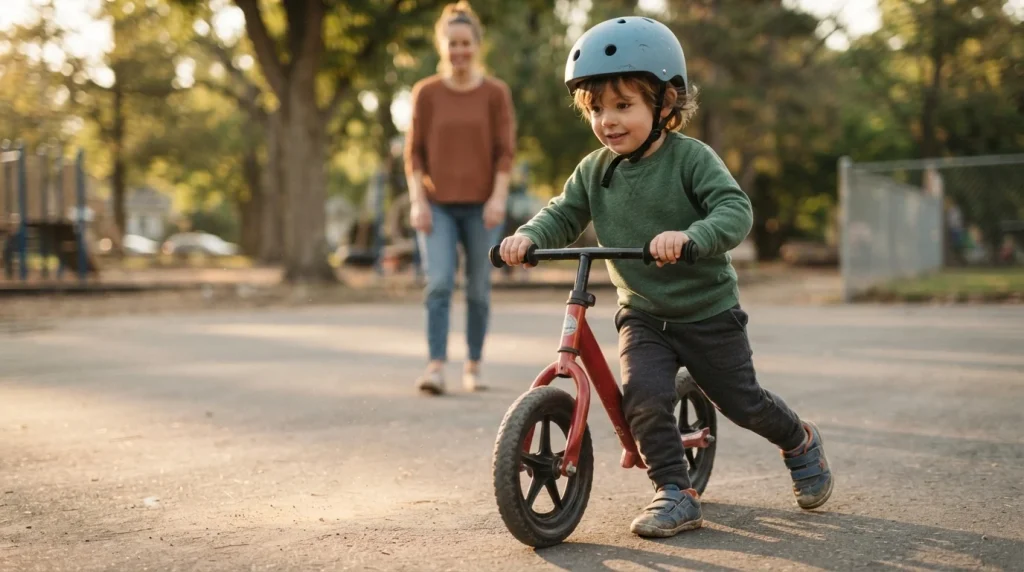
Children develop independent bicycle riding through several stages, beginning with basic handling and progressing toward controlled pedaling, steering, and stopping.
Step 1
Become comfortable with the bicycle
Allow your child to sit on the bike, hold the handlebars, and explore basic movements.
Step 2
Practice moving with feet
Encourage your child to push against the ground and become familiar with forward movement.
Step 3
Develop independent balance
Practice lifting the feet briefly while gliding. Increase the distance as control improves.
Step 4
Learn steering and stopping
Introduce gentle direction changes and controlled stopping before progressing to independent pedaling.
Step 5
Introduce pedals
Help your child combine established balancing skills with forward pedaling.
Step 6
Build independent riding skills
Practice starting, turning, maintaining direction, and stopping without assistance.
Children do not need to complete every stage during the same lesson. Repeating familiar activities before introducing new challenges can make learning more manageable.
How Often Should a Child Practice Riding a Bike?
Children benefit from regular, manageable bicycle practice sessions that end before frustration or tiredness becomes a problem.
Cycling UK suggests that about 30 minutes of cycling instruction is enough for young children at a time.
Shorter sessions may be more suitable for children who lose interest quickly or are nervous about riding.
Consider ending a practice session when your child:
- Begins struggling with previously comfortable movements.
- Shows signs of physical tiredness.
- Becomes frustrated or upset.
- Stops following instructions.
- Asks to finish riding.
Finishing with a familiar activity can help your child associate bicycle practice with a positive experience.
Tip
Use a chalk line on a smooth practice surface as a visual target. Encourage your child to glide toward it without focusing on speed.
Do Balance Bikes Help Children Learn Faster?
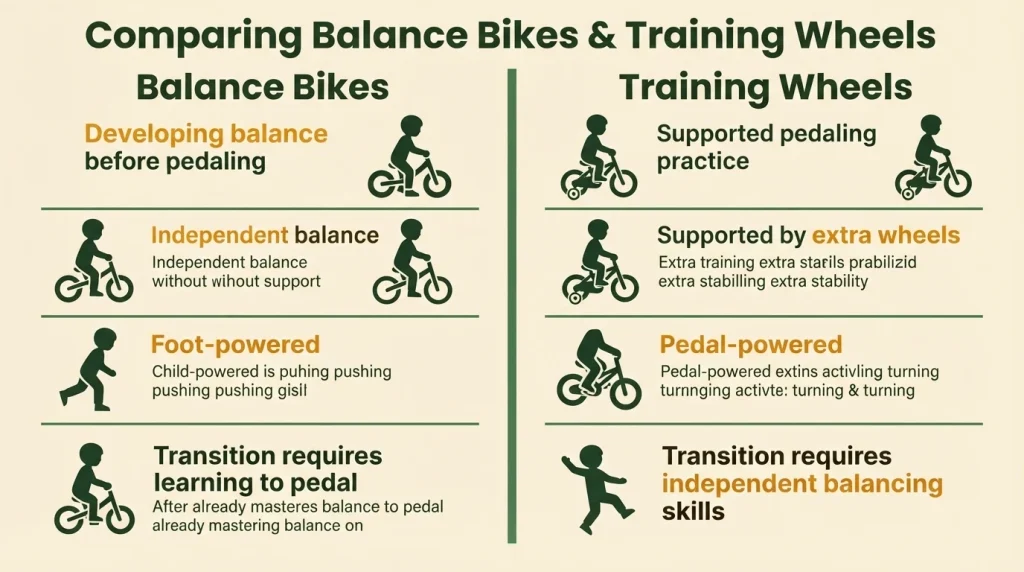
Balance bikes may help children learn pedal cycling faster because they develop balance and steering without requiring simultaneous pedaling.
Training wheels support the bicycle from both sides. They allow children to practice pedaling, but they reduce the need to maintain independent balance.
Balance Bikes
Best for: Developing balance before pedaling
- Balance: Developed independently
- Movement: Foot-powered
- Transition: Requires learning to pedal
Training Wheels
Best for: Supported pedaling practice
- Balance: Supported by extra wheels
- Movement: Pedal-powered
- Transition: Requires independent balancing skills
Both approaches introduce children to cycling. The balance-first method separates skills that beginners might otherwise find difficult to learn together.
How to Tell if Your Child Is Making Progress
A child is making bicycle riding progress when they demonstrate improved control, greater confidence, and less dependence on adult assistance.
Independent pedaling is not the only sign of improvement. Smaller achievements can show that your child is developing the skills needed for successful riding.
Look for these signs during practice:
- Getting onto the bicycle more comfortably.
- Keeping their feet off the ground while gliding.
- Looking forward instead of constantly watching their feet.
- Making smoother steering movements.
- Stopping at an intended location.
- Starting with less adult assistance.
- Showing interest in practicing again.
Progress may not happen in the same order for every child. Focus on the specific skill that has improved since the previous lesson.
Why Is My Child Taking So Long to Learn to Ride?
A child may take longer to learn because they need additional practice with balance, lack confidence, have unsuitable equipment, or are not ready to ride.
Difficulty Keeping the Bike Upright
Children who struggle to keep a bicycle upright may benefit from returning to foot-powered movement and gliding practice.
Removing the pedals from a suitable bicycle can help separate balancing from pedaling. Make sure the bicycle remains properly fitted and safe to use.
Difficulty Starting Independently
Starting independently can take longer to master than maintaining movement after an adult provides initial assistance.
Practice getting into a comfortable starting position. Allow your child to focus on moving forward before introducing additional challenges.
Fear After Falling
A previous fall may make a child hesitant to attempt independent cycling again.
Check for injuries before returning to practice. If your child is comfortable continuing, begin with an activity they already understand.
Too Much Pressure During Lessons
Pressure to learn quickly can make children less willing to practice and increase their frustration.
Avoid comparing your child’s progress with siblings, friends, or other children. Encourage individual achievements and allow them to take breaks when needed.
How Can You Help Your Child Learn Faster?
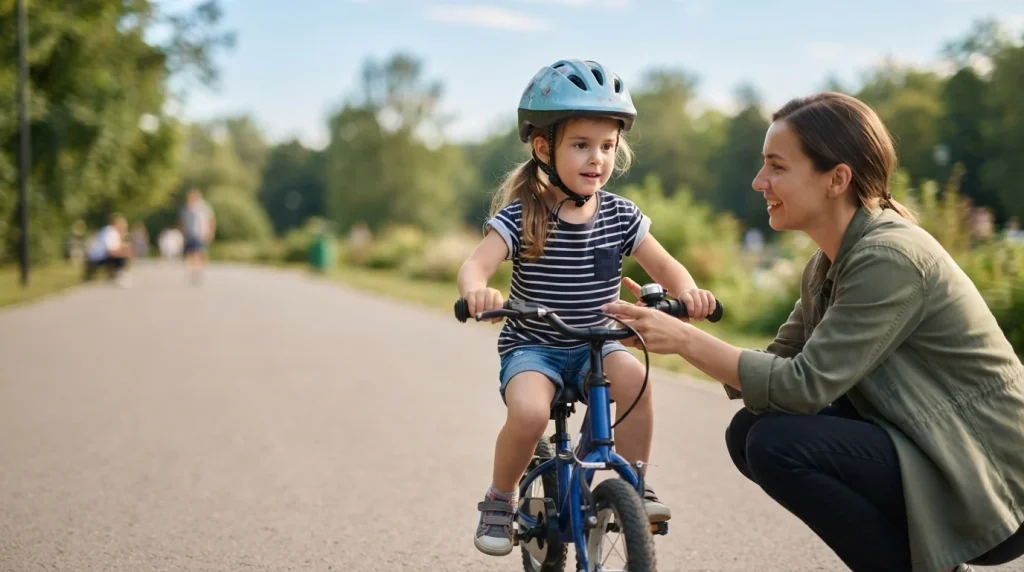
You can support faster bicycle learning by choosing suitable equipment, practicing individual skills, providing encouragement, and reducing unnecessary distractions.
Start with a bicycle that your child can manage comfortably. Select a flat, smooth practice area away from motor vehicles.
Give simple instructions that focus on a single movement. Introduce a new skill when your child feels comfortable with the previous activity.
Useful teaching practices include:
- Checking bicycle fit before lessons.
- Allowing your child to develop balance first.
- Practicing controlled stopping early.
- Giving your child time to repeat familiar movements.
- Recognizing improvements instead of setting deadlines.
- Taking breaks when concentration decreases.
Provide a properly fitted bicycle helmet that meets applicable safety standards. Supervise your child throughout practice and choose an area suitable for their riding ability.
When Should You Consider Professional Bike Lessons?
Professional bicycle lessons may be helpful when your child continues to struggle despite repeated practice or responds better to structured instruction.
A qualified cycling instructor can observe your child’s movements and identify which skills require additional attention.
Lessons may also suit children who become frustrated when learning from family members. An instructor can offer a different teaching approach.
Look for a program that adapts activities to your child’s ability, confidence, and individual needs rather than promising a fixed learning deadline.
Kids Balance Bikes
A properly fitted balance bike allows children to practice steering and independent balance before moving to a pedal bicycle.
Frequently Asked Questions
Is seven years old too late to learn cycling?
Seven years old is not too late for a child to begin learning the skills needed to ride a bicycle independently. Older beginners can follow the same balance-first approach as younger children. Choose equipment that fits their size and avoid treating age as a deadline.
Can a child forget how to ride a bike?
A beginner may temporarily struggle with bicycle riding after a long break, especially if their independent riding skills were not fully developed. Returning to familiar practice activities can help rebuild confidence. Check bicycle fit before restarting, particularly if your child has grown since their previous lesson.
Should siblings learn to ride a bike together?
Siblings can learn bicycle riding together when shared practice encourages participation without creating competition or pressure to progress at the same speed. Each child should receive instruction suited to their ability. Separate practice activities may be helpful when siblings have different experience levels or learning needs.
Can children learn cycling on grass?
Children can practice bicycle riding on grass, but the extra rolling resistance may make gliding and starting difficult for a beginner. A flat, smooth surface away from traffic generally allows easier forward movement. Avoid uneven ground, hidden holes, and other obstacles that could interfere with bicycle control.
Does learning to pedal backward delay bike riding?
Pedaling backward does not necessarily indicate a long-term difficulty with learning to ride a bicycle, especially during early practice sessions. Children may need time to understand how forward pedal movement works. Demonstrate the motion and allow them to practice without adding unnecessary pressure.
Can a child learn cycling during a weekend?
A child may learn basic independent bicycle riding during a weekend if they have sufficient balance, confidence, and opportunities to practice. However, a weekend should not become a deadline for mastering every riding skill. Continue practicing controlled turns, independent starts, and stopping after initial success.
Should my child practice riding alone after learning?
A child who has recently learned independent bicycle riding still needs supervision appropriate to their age, experience, and riding environment. Basic pedaling ability does not demonstrate readiness to navigate traffic or unexpected obstacles. Continue supervised practice while your child develops reliable bicycle control and safe riding habits.
Conclusion
How long does it take a child to learn to ride a bike? Learning may take a single session, several weeks, or longer depending on individual readiness. Focus on the next manageable riding skill, provide regular practice, and allow your child to progress without pressure.
